There is something about an Art Deco ruby ring that feels instantly powerful. Perhaps it is the confidence of the geometry, or the depth of that unmistakable red, but these pieces never fade quietly into the background. They were designed to be noticed.
The 1920s and 1930s marked a moment of bold creative change. Jewellery moved away from soft Edwardian curves and embraced symmetry and contrast. Rubies became the perfect centrepiece for this new aesthetic. When paired with bright white diamonds and platinum settings, the effect was striking then, and it still is now.
What Defines an Art Deco Ruby Ring?
Art Deco jewellery is often recognised by its architectural feel. Clean lines, balanced proportions and sharp silhouettes are key. In ruby rings from this era, you will frequently see strong geometric outlines framing the central stone, often enhanced with meticulously set diamonds.
Platinum was the metal of choice throughout much of the 1920s, prized for its strength and ability to hold delicate detailing. Early white gold also became popular, offering a similarly bright finish that intensified the contrast between the red of the ruby and the surrounding diamonds.
Many authentic pieces feature calibre-cut rubies set in precise channels, millegrain edging that adds fine texture along the borders, and old European or single-cut diamonds that sparkle with a softer, more romantic glow than modern cuts. The craftsmanship was largely hand-fabricated rather than cast, which gives original Art Deco rings a subtle individuality that is difficult to replicate today.
The Allure of Burmese Rubies
Among the most coveted examples from the period are those set with Burmese rubies. Burmese stones are celebrated for their exceptional saturation and vibrancy, often displaying a rich, glowing red that seems to hold light within it.
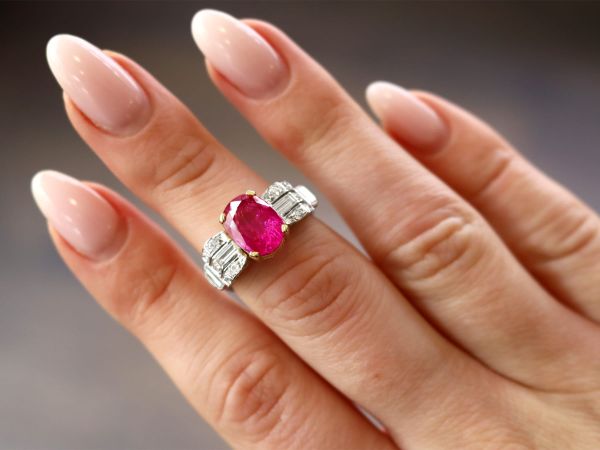
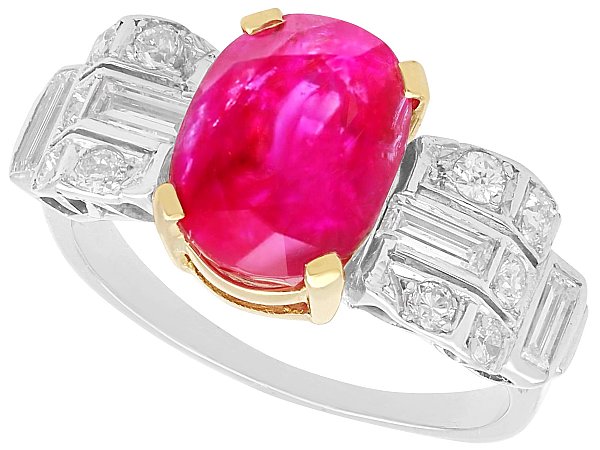
The Antique 4.67ct Burmese ruby and diamond ring is a wonderful example of this drama. With its impressive ruby weight and surrounding diamonds, it embodies the bold confidence of late Art Deco design. It is not a delicate, understated piece, it is the kind of ring that transforms an outfit instantly.
Geometry and Precision in Design
One of the most appealing aspects of Art Deco ruby rings is the variety within their structure. Some designs lean heavily into linear, almost architectural forms, while others experiment with softer but still symmetrical shapes.
The Art Deco 0.42ct ruby and 2.97ct diamond 18ct white gold dress ring demonstrates how designers used diamonds to amplify the ruby’s presence. The white gold setting and substantial diamond weight create a brilliant frame, allowing the central ruby to glow with even greater intensity.
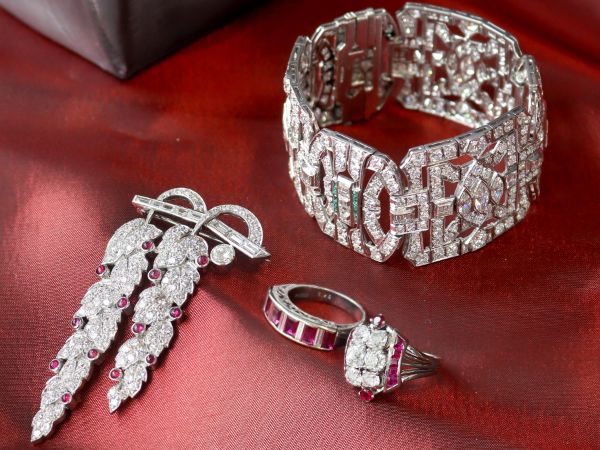
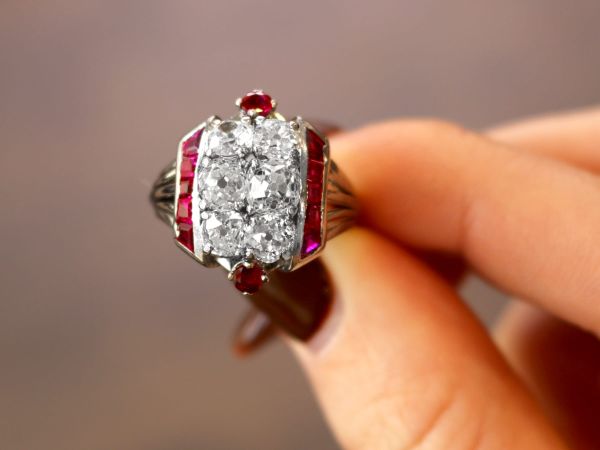
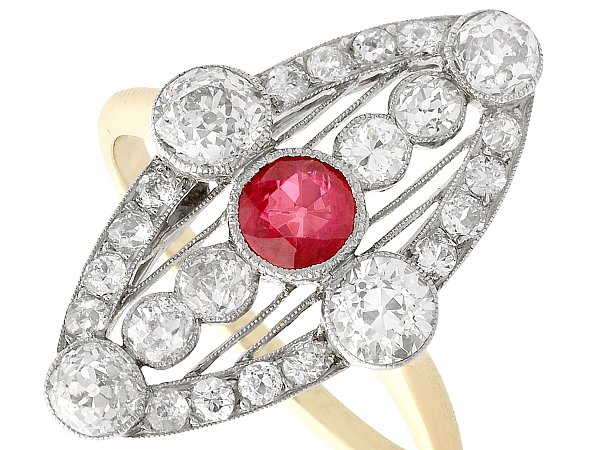
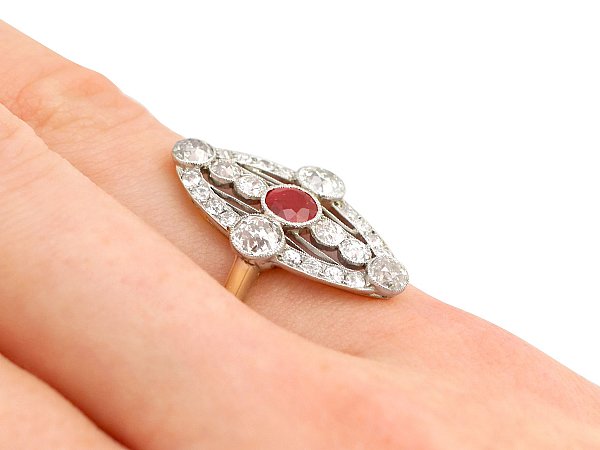
For those who appreciate more distinctive outlines, the 0.62ct Ruby and 1.88ct Diamond 18ct Yellow Gold Marquise Ring, Art Deco Antique Circa 1920 showcases the elegance of the marquise shape. The elongated silhouette flatters the hand beautifully, while the combination of yellow gold and diamonds reflects the transitional creativity of the early 1920s.
Why Were Rubies So Popular in the 1920s?
Rubies have long symbolised passion, vitality and protection. After the uncertainty of the First World War, the vibrant red stone resonated strongly with a generation embracing optimism and modernity. The saturated colour complemented the bold lines of Art Deco design perfectly.
There is also a practical reason for their appeal. When set against platinum and diamonds, rubies provide dramatic contrast. This interplay of red and white became one of the defining visual signatures of the era. Even today, that contrast feels fresh and contemporary.
Craftsmanship That Stands the Test of Time
One of the reasons collectors continue to seek out authentic Art Deco ruby rings is the level of workmanship. Many pieces feature intricate pierced gallery work beneath the setting, carefully applied millegrain borders, and hand-set stones that demonstrate real skill.
Platinum’s durability has allowed many of these rings to survive in remarkable condition. Unlike some softer metals, it holds stones securely over decades of wear. When combined with natural, untreated rubies, the result is jewellery that has both beauty and longevity.
Why Collectors Still Love Art Deco Ruby Rings
Art Deco ruby rings have a strong design identity. They are not generic. Each piece tells you immediately which era it belongs to, yet they never feel outdated.
Collectors appreciate the rarity of natural rubies, especially Burmese examples, and the distinctive geometry that sets this period apart. For those searching for a unique engagement ring or a statement dress ring with history, Art Deco ruby rings offer individuality that modern mass production rarely matches.
They are bold without being brash, structured without being severe, and vintage without feeling old-fashioned. That balance is precisely why they remain so compelling.
If you are drawn to jewellery with presence and personality, an Art Deco ruby ring may be exactly what you are looking for, a piece of 1920s confidence that still feels entirely at home today.
Art Deco Rings
Each Art Deco ring provided undergoes meticulous examination by our jewellery experts to ensure authenticity, condition, and craftsmanship.
All gemstones and diamonds come with independent certification, and in cases where rings lack hallmarks, their metal purity is verified using a Niton analyser. This process guarantees precision, transparency, and assurance with every purchase.
Whether you are seeking a statement Art Deco cocktail ring, a geometric sapphire ring, an Art Deco emerald ring, or an heirloom engagement ring inspired by the Deco period, our collection showcases the exceptional artistry that continues to make Art Deco jewellery so admired today.