When exploring antique or Art Deco engagement rings, many buyers find themselves drawn to two richly coloured gemstones: ruby and sapphire. Both were highly prized during the Art Deco period (c. 1908–1935), a time defined by bold geometry, striking contrasts, and a celebration of colour.
While ruby and sapphire share the same mineral origin, their visual character and symbolism differ significantly. Choosing between them is not simply a matter of colour, it’s about personal style, meaning, and how each gemstone interacts with the distinctive design language of the Art Deco era.
Colour & Visual Impact
Colour played a central role in Art Deco jewellery. Unlike earlier periods that favoured softer, more delicate palettes, Art Deco design embraced vivid, high-contrast combinations. Jewellery became architectural, graphic, and unapologetically bold.
Both ruby and sapphire were favoured for their ability to introduce intense colour into platinum and diamond settings.
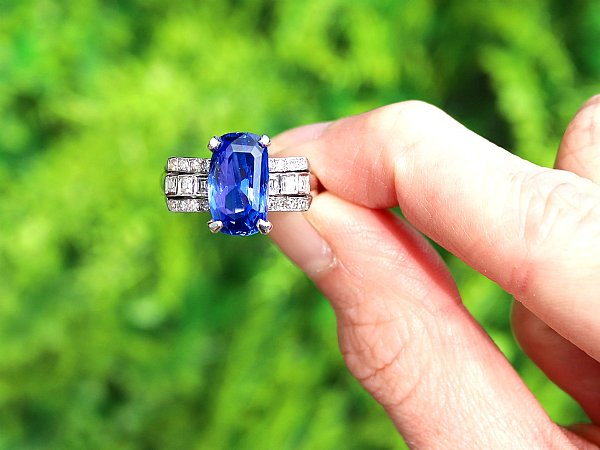
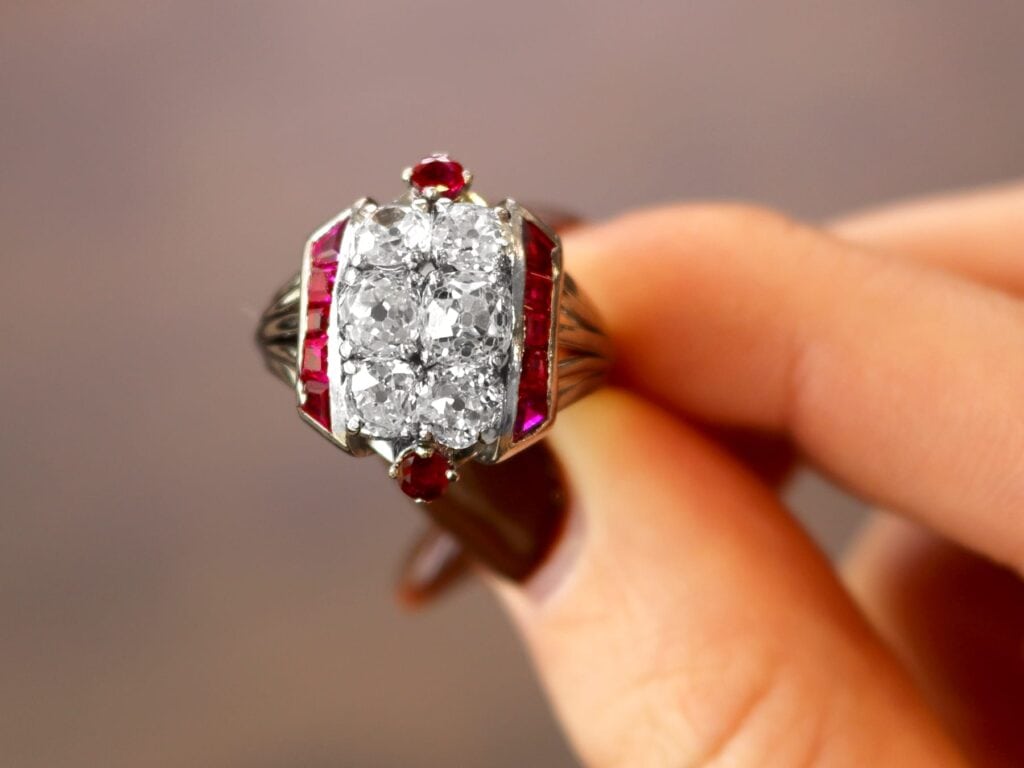
Ruby Offers:
- A rich, deep red hue ranging from pinkish-red to pigeon blood red
- Strong associations with passion, vitality, and power
- Striking contrast when paired with white diamonds and platinum
- A warmth that immediately draws the eye
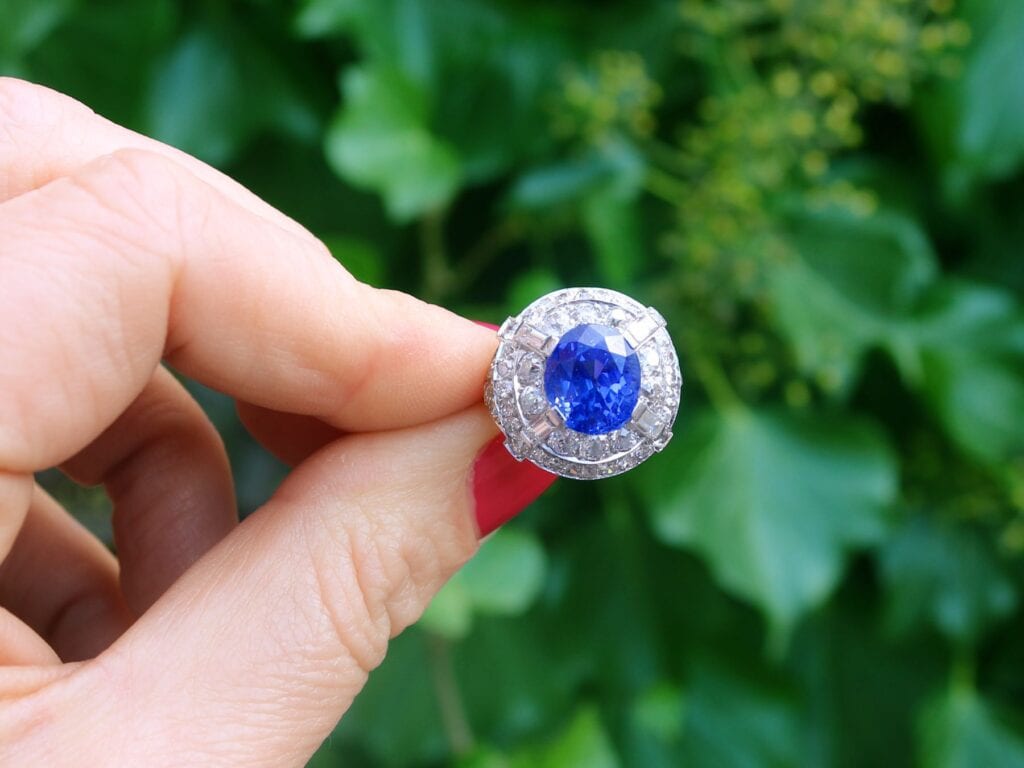
Sapphire offers:
- Most commonly a deep velvety blue, though also found in other colours
- Symbolism tied to wisdom, loyalty, and truth
- A cooler, more understated contrast against diamonds
- A calming elegance that feels timeless and refined
In Art Deco jewellery, ruby rings tend to feel bold, dramatic, and expressive, while sapphire rings lean toward sophistication, balance, and enduring elegance.
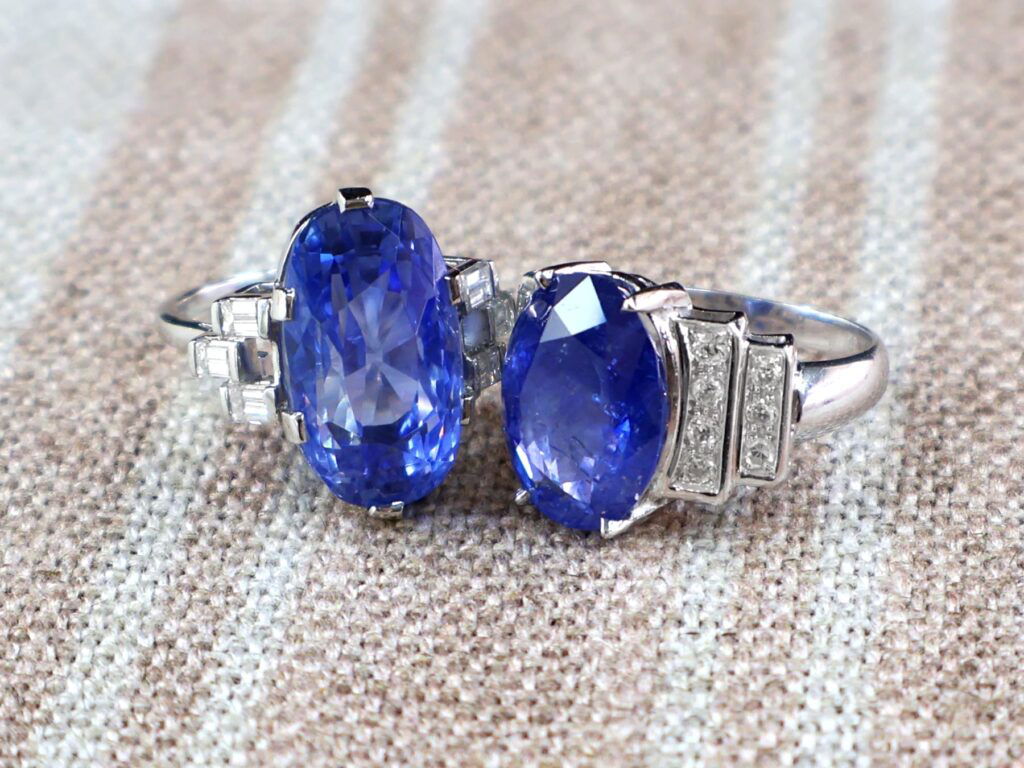
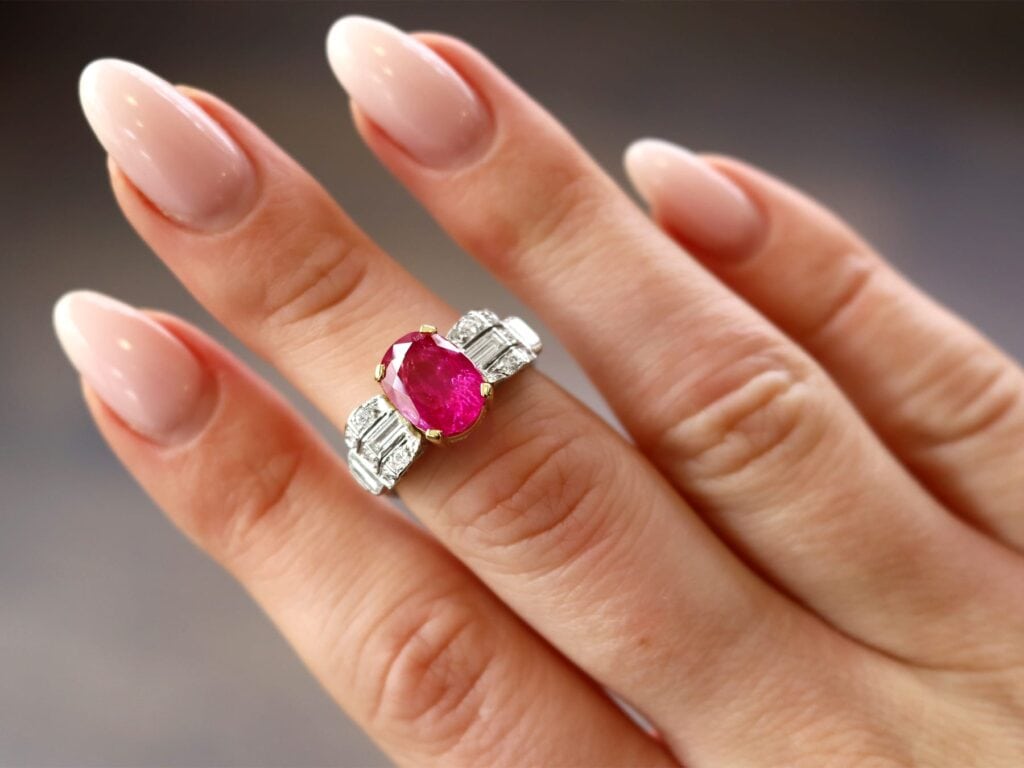
Art Deco Design Pairings
Ruby and sapphire are both varieties of corundum, one of the hardest minerals used in jewellery (second only to diamond), making them highly suitable for everyday wear in engagement rings.
Historically, both gemstones have strong royal associations. Rubies were often linked to power and protection—famously set into coronation rings—while sapphires were believed to bring wisdom and safeguard their wearer, making them a favourite among European royalty.
In Art Deco jewellery, these gemstones were frequently incorporated into highly structured, geometric designs. Common settings include:
• Diamond cluster rings with a central coloured stone
• Navette (marquise-shaped) designs that elongate the finger
• Calibré-cut gemstone borders, where rubies or sapphires are precisely cut to fit intricate patterns
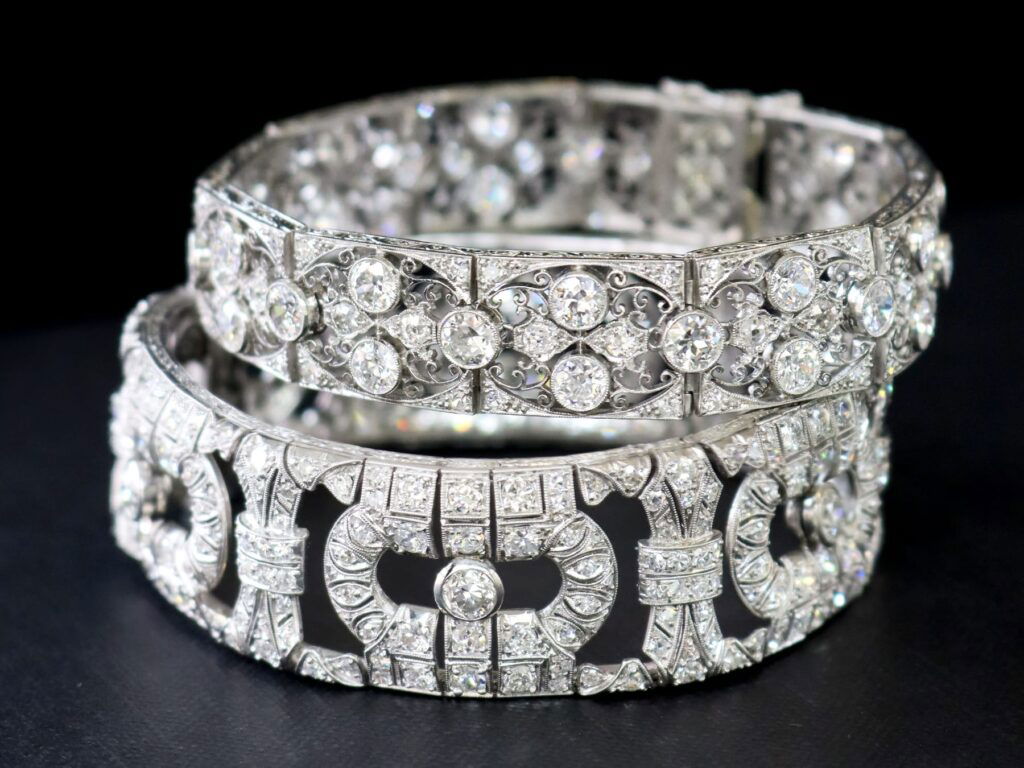
• Geometric platinum frameworks featuring symmetry and sharp lines
Ruby-set designs often emphasise contrast, bright white diamonds framing a vivid red centre, creating a bold, almost graphic effect. In contrast, sapphire designs typically highlight harmony and symmetry, with cool blue tones enhancing the crispness of diamond settings.
Durability & Wearability
Both ruby and sapphire rank 9 on the Mohs hardness scale, making them excellent choices for engagement rings that are worn daily.
However, there are subtle differences to consider:
- Rubies may show inclusions (often called “silk”), which can affect transparency but also confirm natural origin
- Sapphires are generally more available in larger, cleaner stones
In practical terms, both gemstones are durable and suitable for long-term wear, especially when set in protective Art Deco designs.
Investment & Rarity
From a collector’s perspective, both ruby and sapphire Art Deco rings are highly desirable—but there are differences in rarity and pricing.
- Fine rubies, particularly untreated Burmese rubies, are among the rarest gemstones in the world and can command exceptionally high prices
- Sapphires, especially those from Kashmir, Ceylon (Sri Lanka), or Burma, are also valuable, particularly when untreated
The value of an Art Deco ring is influenced by several factors:
- Gemstone origin and quality
- Presence and quality of diamonds
- Condition of the piece
- Craftsmanship and design integrity
- Provenance (where available)
Because fine rubies are rarer, ruby-set Art Deco rings can sometimes carry a premium over comparable sapphire pieces.
Which Should You Choose?
Choosing between a ruby and a sapphire ring ultimately comes down to personal taste and what you want your ring to represent.
Choose a ruby if you prefer:
- Warm, vibrant tones
- A bold, statement-making piece
- Symbolism tied to passion, love, and strength
- A slightly rarer and often more distinctive gemstone
Choose a sapphire if you prefer:
- Classic, timeless elegance
- Cooler, more understated tones
- Strong royal and traditional associations
- A versatile gemstone that pairs effortlessly with many styles
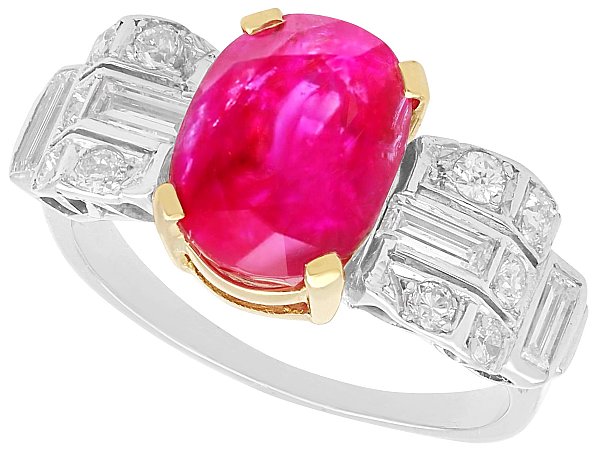
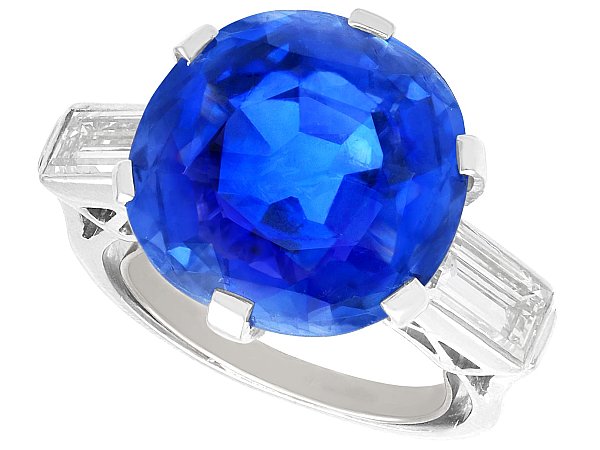
Both ruby and sapphire played an integral role in Art Deco jewellery design, embodying the era’s love of colour, contrast, and precision. Whether you are drawn to the fiery intensity of a ruby or the refined depth of a sapphire, each offers its own unique character within the architectural beauty of Art Deco craftsmanship.
Rather than asking which is “better,” the real question is: which one feels right for you?