Antique cufflinks are highly desirable to jewellery collectors and a staple accessory. Thanks to their rich history, impressive craftsmanship and varied designs, antique cufflinks are a great investment for both practicality and sentimentality. As the demand for antique accessories increase, there are more reproductions and reinterpretations of these antique and vintage style pieces. Therefore, if you are considering investing in an antique piece of jewellery it’s important to understand how to distinguish an authentic antique item from a modern imitation.
In this guide we’ll discuss key characteristics of genuine antique cufflinks exploring era specific features, to help you shop more confidently.
What Makes a Cufflink “Antique”?
Typically, an item of jewellery is classified as antique if it is over 100 years old. Vintage describes pieces that are over 20 – 30 years old but not more than 100 years old.
For cufflinks:
- Victorian cufflinks (1837–1901) are now antique.
- Edwardian cufflinks (1901–1910) and early Art Deco cufflinks (1908–1935) also qualify as antique.
- Mid-century cufflinks (1940s–1960s) are considered vintage—but still highly collectible.
Knowing the era will help you to narrow down the materials, designs and techniques to expect.
Start With the Style: Does the Design Match the Era?
An easy way to spot authentic antique cufflinks is to study the design. Each era has distinctive qualities and characteristics. Here are just a few key features of each era:
Georgian (1714 – 1837):
- Pieces were handcrafted
- 18ct gold was commonly used.
- Gemstones likely had foil-backed or closed-back settings
- Designs were bold, flamboyant and grand.
Victorian Cufflinks (1837–1901)
Victorian cufflinks reflect the refinement and craftsmanship of 19th-century jewellery design. Created during a period of great innovation and elegance, these pieces often featured:
- Exuberant and ostentatious designs
- Serpents were a popular motif used
- Embellished with gemstones
- Gold and silver were frequently used
- Pearls, onyx and black jet reflected the mourning period
- Arts and Crafts and Art Nouveau designs were used
Edwardian Cufflinks (1901–1910)

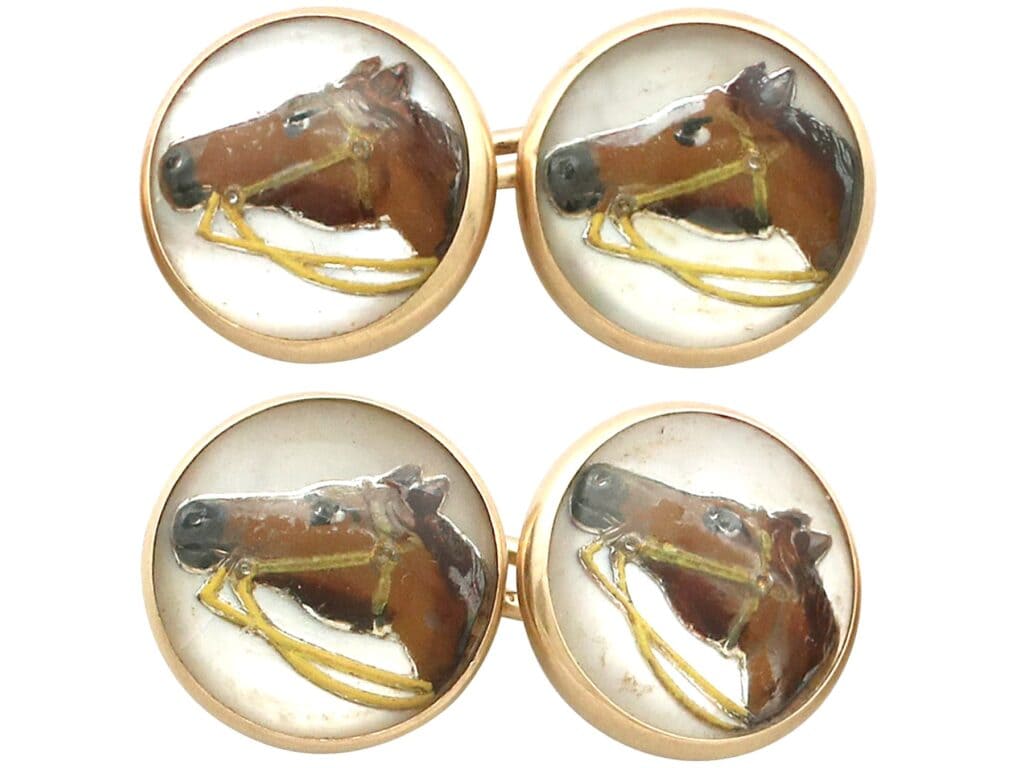
Edwardian cufflinks are celebrated for their elegance, lightness, and exceptional craftsmanship. Created during the early 20th century they include:
- Platinum and gold combinations.
- Lace designs with filigree style settings.
- Swirling and floral motifs.
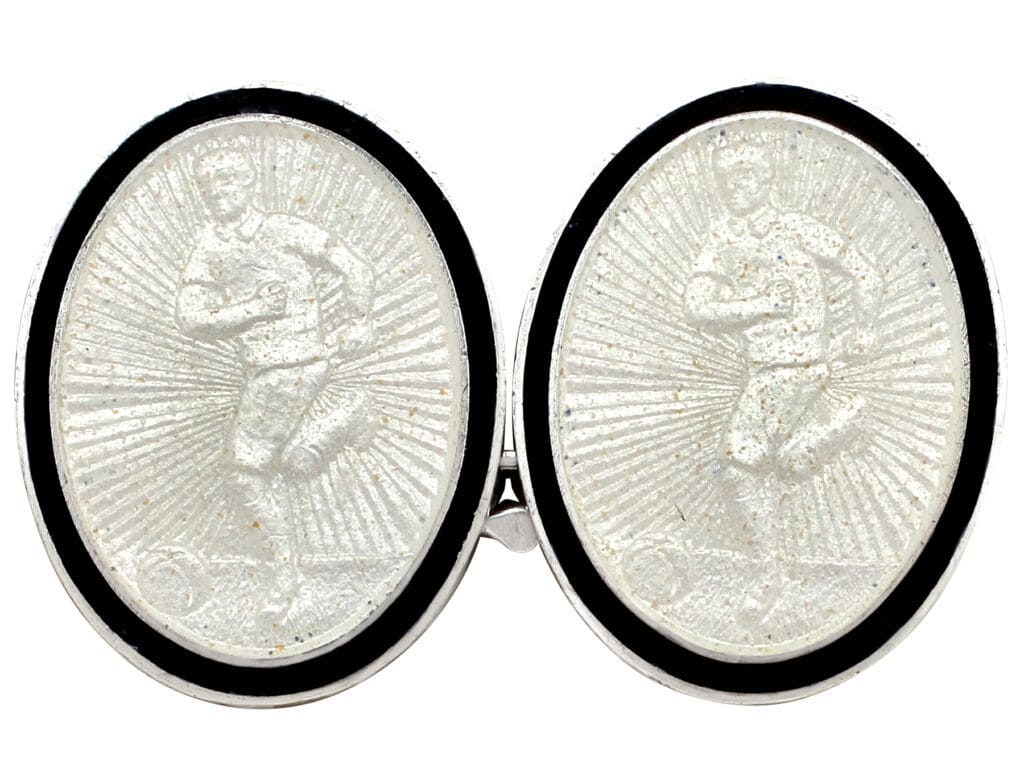
- Engraved and enamelled guilloche cufflinks were popular.
Art Deco Cufflinks (1908–1935)
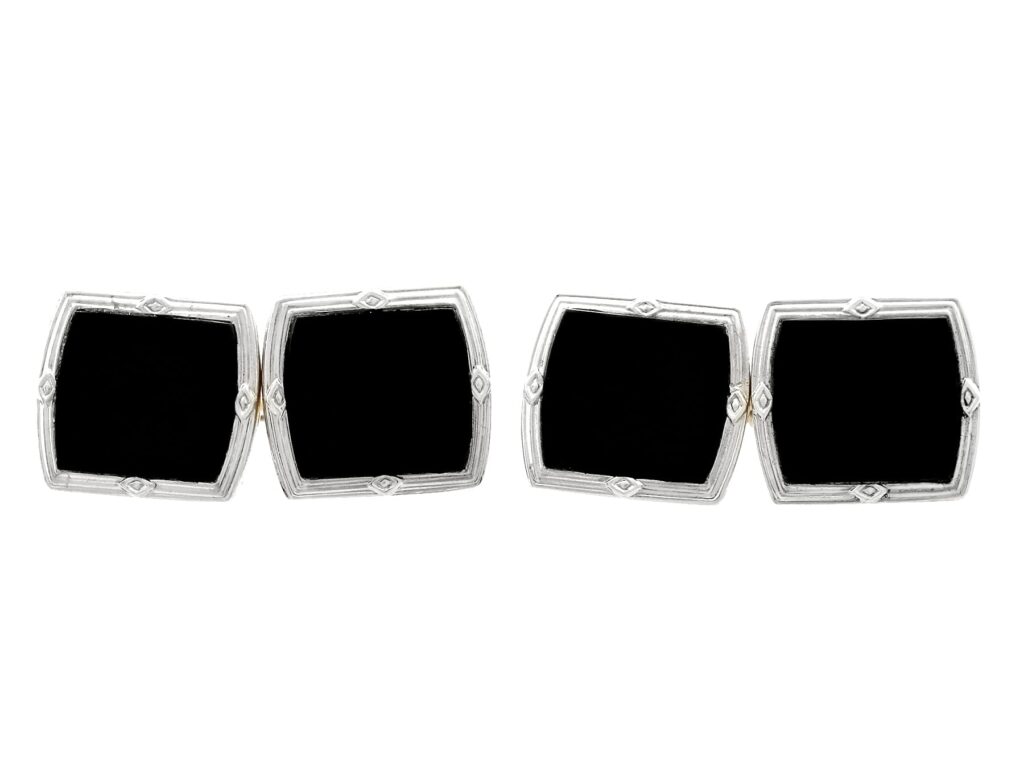
Art Deco cufflinks reflect the bold design and modern spirit of the early 20th century. Emerging in the 1920s and 1930s, they are characterised by strong geometric forms, clean lines, and striking contrast. These cufflinks contain:
- Bold and geometric designs.
- Strong and symmetrical lines
- Monogrammed initials
- Platinum and white gold became fashionable
- Embellished with gemstones
Mid-Century Cufflinks (1940s–1960s)
- Often were a round gold-toned metal
- Had coloured glass or resin
- Military had a strong influence on designs
- Art Deco designs were popular
- Monogrammed initials, lucky horseshoes, planes, palm trees and pin up girls were among the design themes
If a pair of cufflinks is supposed to be from a certain era but the design seems inconsistent with the styles of that time it may be a reproduction or incorrectly dated. For example many pieces of antique jewellery are in the Art Deco ‘style’ but not from the period, this isnt to say this is a negative, it is just something to be aware of.
Examine the Construction: Handcrafted vs Mass-Produced
Antique cufflink examples that are authentic were handcrafted, this means:
✔ Slight asymmetry is common
✔ Settings are hand-cut and individual
✖ Identical mass-produced components
✖ Laser-cut or machine-perfect edges
The feel of authentic antique cufflinks is more solid and substantial than lightweight modern versions.
Inspect the Metal: What Was Used in Each Era?
Similar to the differing design elements, different eras used different metals which can help to indicate what period the cufflinks were produced.
Gold: When cufflinks first emerged, gold was most often used.
Yellow gold was common in the Georgian and Victorian eras.
In the 1920s white gold became on trend.
Platinum: Platinum became fashionable in the roaring 20s.
Silver: Silver cufflinks were popular in the Victorian era.
Enamel: Engraved and enamelled guilloche cufflinks were popular in the Edwardian era.
At the end of the 19th century the colourful Fabergé style, which was made with enamel, was popularised by Edward VII. It is a prominent material in Victorian and Art Deco cufflinks.
Metal Verification
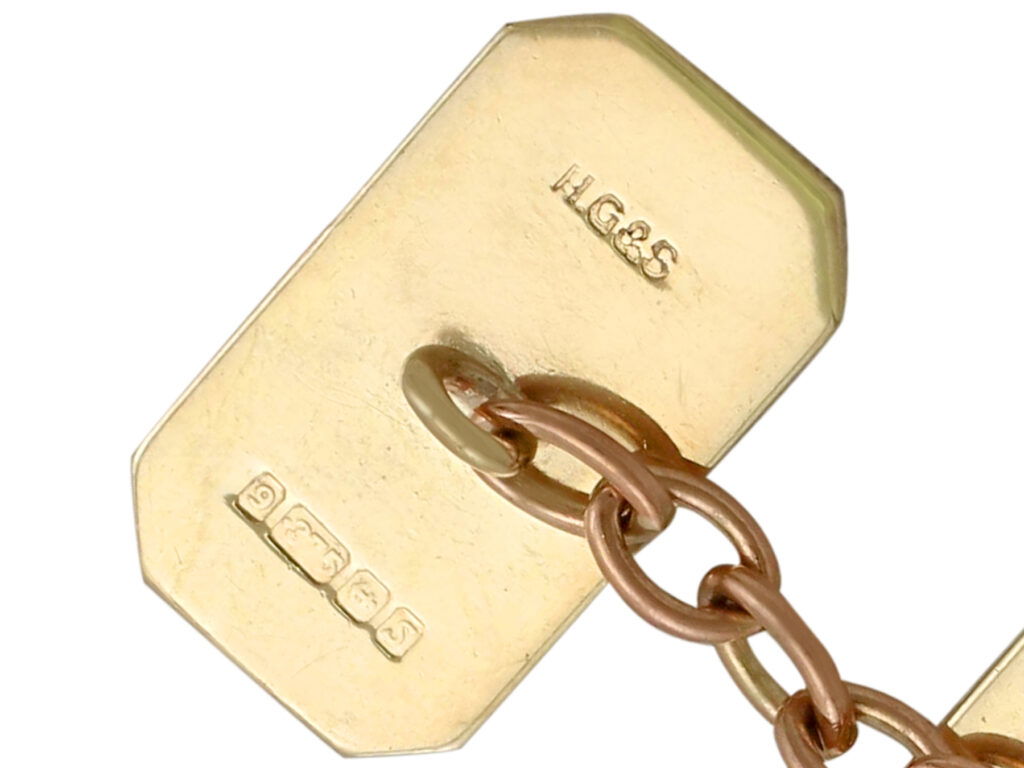
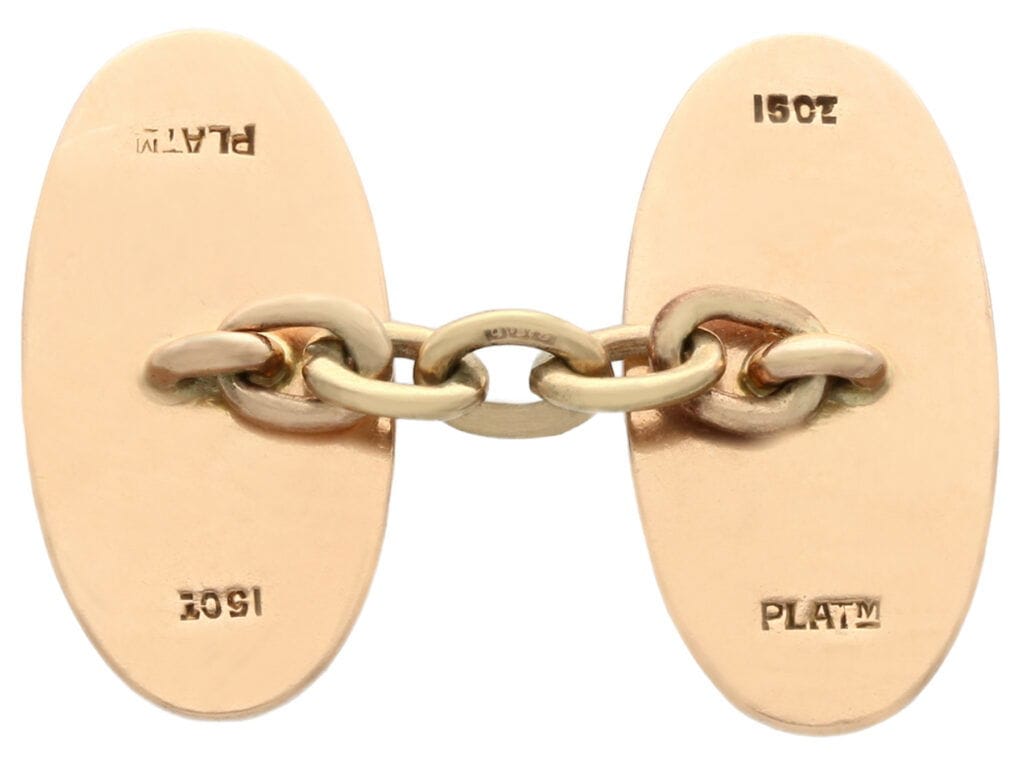
Early examples may not be hallmarked which can indicate the date, maker, metal purity and origin of the item. Trusted sellers, including AC Silver, use a Niton XL2 Analyzer to verify the metal even when hallmarks are worn or absent.
Hallmarks: Useful, But Not Always Present
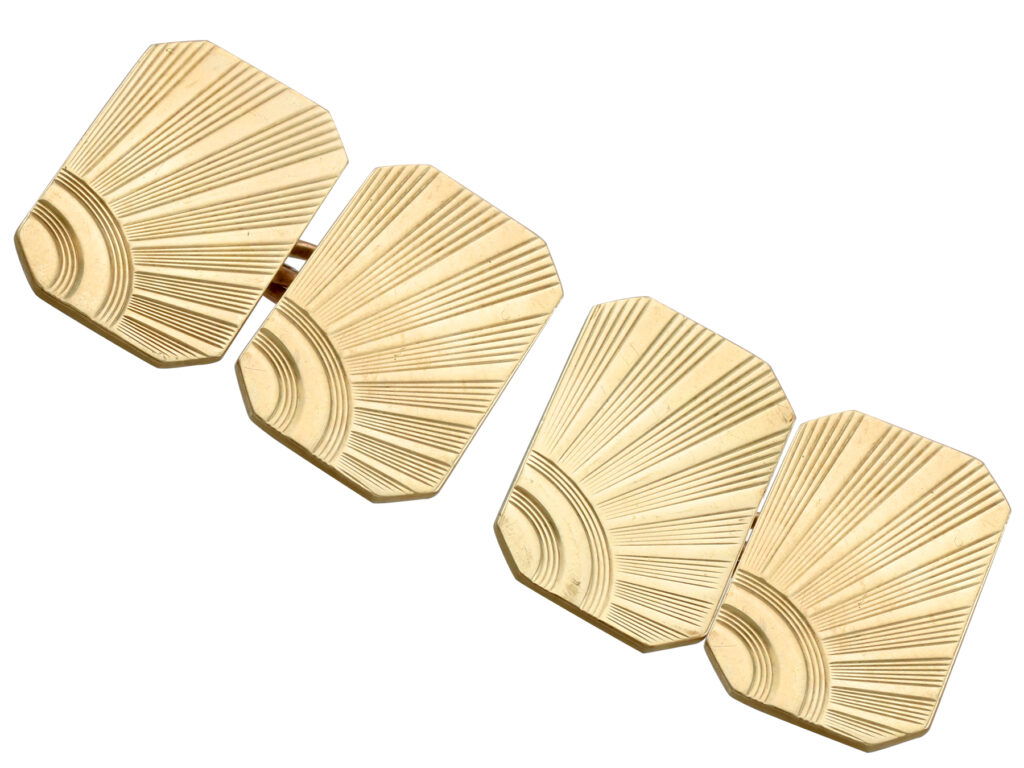
Hallmarks can confirm:
- Metal purity
- Country of origin
- Maker’s mark
- Year stamp (in some countries)
However:
- Earlier 19th-century cufflinks often lack hallmarks.
- Double-panel or chain-link cufflinks may only feature a maker’s mark on one side.
- Items may have been repolished, resized or had components replaced over time.
A present hallmark that is consistent with the era is a strong indicator of authenticity.
Gemstones: Look for Period-Authentic Materials & Cuts
Gemstones can also help with identifying the age and craftsmanship of the cufflinks.
Common Antique Gemstones
- Onyx (especially Art Deco)
- Sapphire
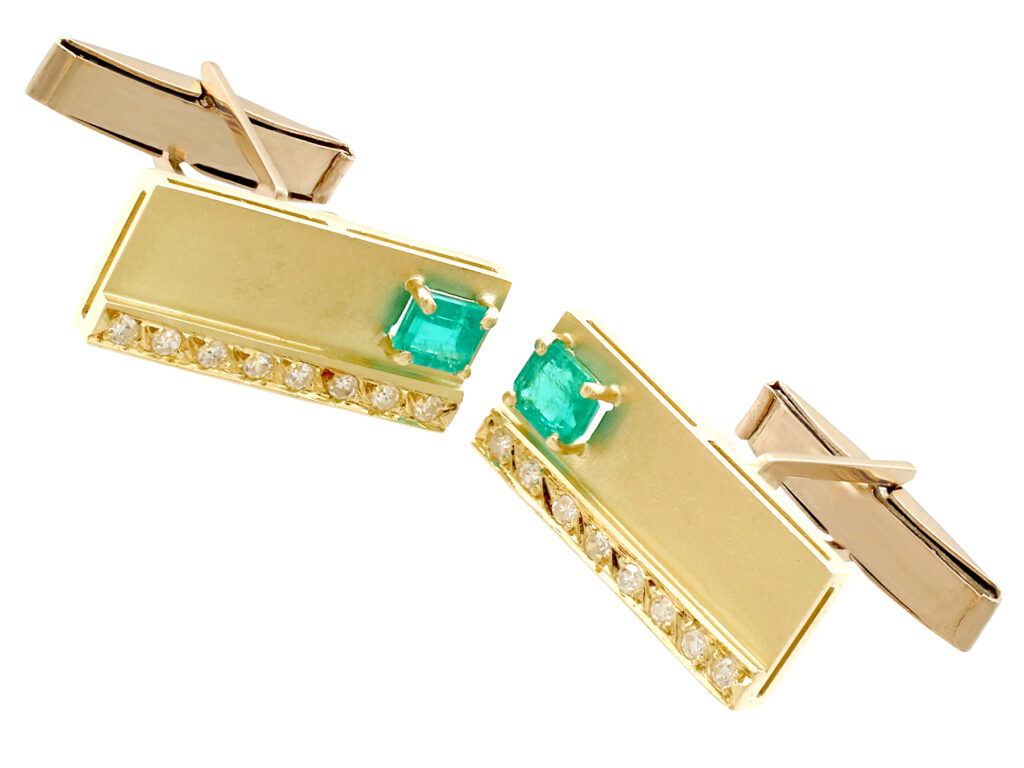
- Emerald
- Ruby
- Mother of pearl
- Coral
- Jade
- Turquoise
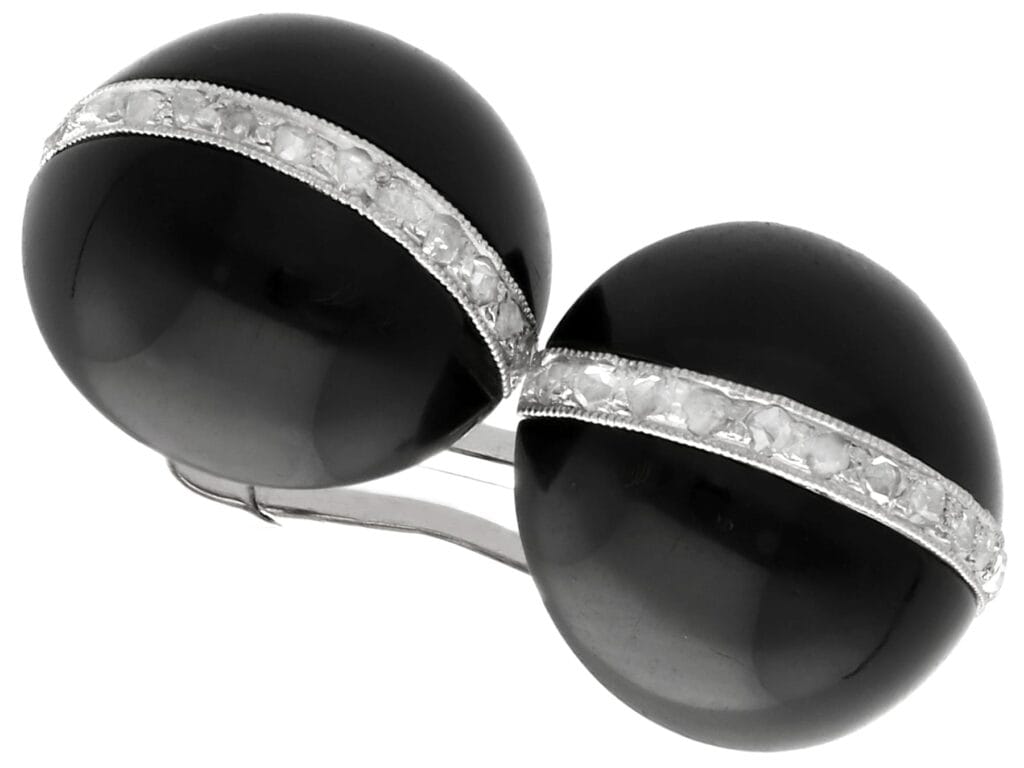
Gemstone Cuts Found in Antique Pieces
- Old European cuts
- Cabochons
- Calibré cuts (key to Art Deco)
- Step cuts
- Hand-carved panels
Modern synthetic gemstones or laser cut gems may be an indication of a reproduction, unless the stones were replaced during a restoration
All gemstones sold at AC Silver Antique Jewellery Store include independent certification ensuring stones are genuine. Any items containing synthetic stones are described in the item’s description.
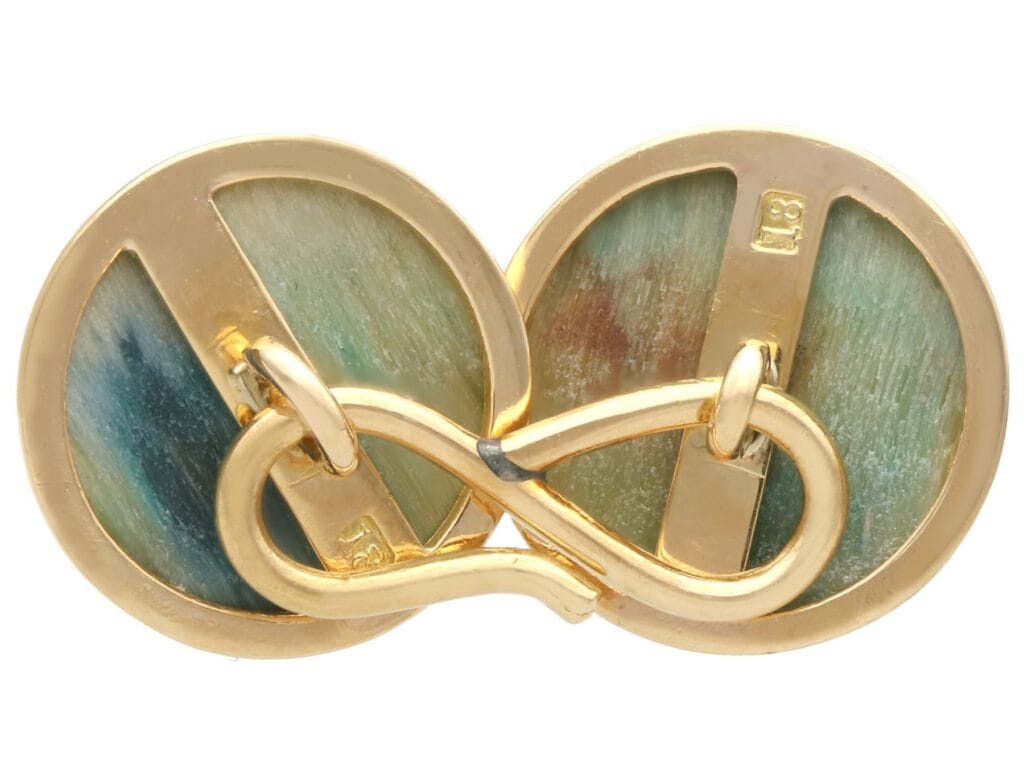
Check the Back: The Reverse Side Reveals Everything
Authentic antique cufflinks have:
- Quality construction
- Secure chains and joints
- Substantial metal weight
- Antique hallmarks, makers marks or engraving (sometimes not or are illegible)
Reproduction pieces often have:
- Weak construction and connections
- Hollow or overly lightweight structure
- No antique hallmarks, makers marks or engraving (sometimes antique ones don’t have these or they are illegible)
Pay Attention to Mechanisms
The different cufflink mechanisms correlate with what was popular at different periods of time. If a cufflink claims to be antique but the mechanism looks too modern then it may not be antique.
Bean Backs (from 17th century)
One-piece cufflinks with what looked like a small bean on the back.
Finger prongs (from 17th century)
They are generally square with two clips at the back.
Chain link (from 17th century)
Two panels held together by a chain
Ball Return (17th century)
Cufflinks with an arched post with a small heavy ball of metal at one end and the decorative face on the other.
Stud or Button Style (17th century for button)
There are no moving parts in this style, just a decorative face attached to a small solid post with a smaller head or backing on the inside. They are put into place by tilting the smaller head and working it through the button holes.
Bullet Back (1930s)
They have a hollow frame with a small bar or tube of metal which sits inside the frame which can then be rotated to lock the cufflinks.
Whale Back (1950s)
These have a flat head and straight post and the name of this style comes from there being a ‘whale tail’ at the end that flips flat against the post.
Wear, Patina & Natural Aging
If a pair of cufflinks are genuinely authentic, they can include subtle signs of age such as:
- Minor surface wear
- Softened edges
- Natural patina (a green or brown film on the surface due to oxidisation)
- Slight colour change in gold
These indicators are not flaws but signs of authenticity. New pieces that are designed to look old can often display artificial distressing or inconsistent ageing.
Provenance & Trusted Retailers
One of the safest ways to ensure authenticity is to buy from a reputable antique jewellery specialist who:
- Validates gemstone authenticity
- Confirms metal purity with analysis
- Dates pieces using stylistic and technical assessment
- Provides detailed condition reports
AC Silver offers independently certified gemstones and uses a Niton XL2 Analyzer to verify gold, giving complete confidence in the quality of each cufflink.
Red Flags: How to Spot a Reproduction Quickly
Be cautious if you notice:
- Overly perfect mass-produced symmetry
- Extremely lightweight metal
- Laser engraving instead of hand engraving
- Synthetic stones passed off as natural
- Pricing too low for genuine materials or craftsmanship
Confidence When Buying Antique Cufflinks
To identify authentic antique cufflinks, it’s important to understand several elements: the design, materials, metalwork, gemstone types, craftsmanship and characteristics of the era they are from. Whilst there are reproductions, original pieces are distinguished by their weight, quality and artistry.
When you know what to look for and when you purchase from a specialist with rigorous testing and certifications you can find antique cufflinks to invest in with confidence.
No matter what style you are drawn to, elegant Edwardian or bold Art Deco, authentic antique cufflinks offer character, beauty and history that can be passed down generations to come.