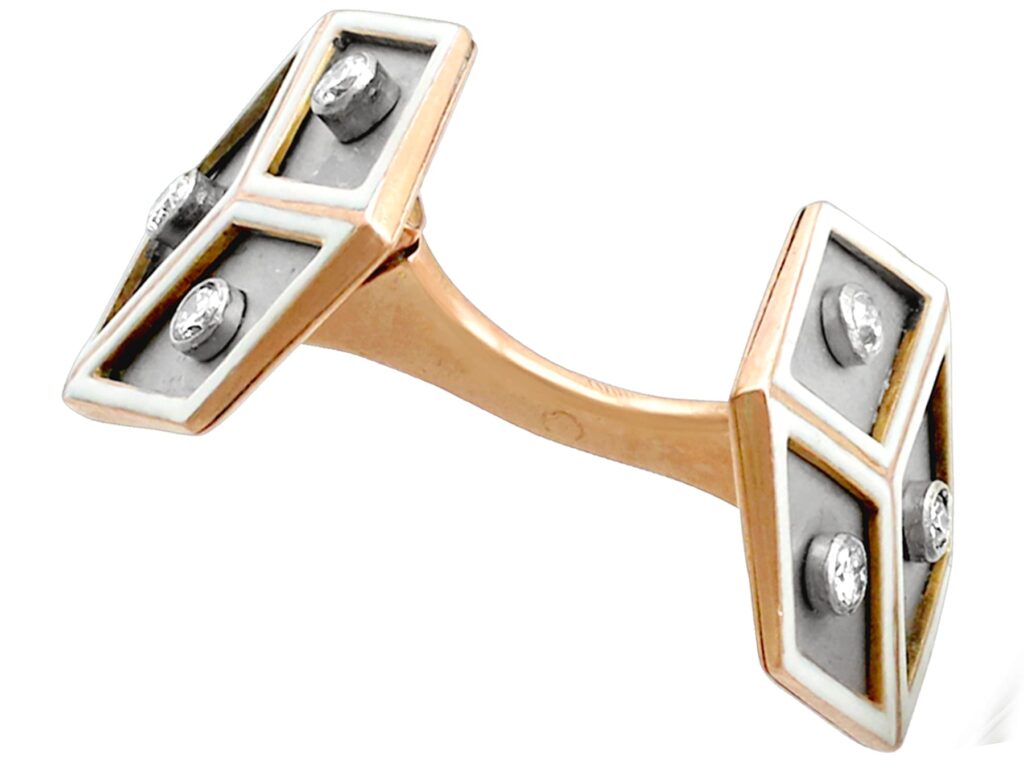
Why Antique and Vintage Cufflinks Have Enduring Appeal
Throughout history cufflinks have been a symbol of style, craftsmanship and sophistication. While modern cufflinks are popular, jewellery collectors still want to invest in the antique and vintage cufflink examples. These pieces are rich in history and showcase intricate and detailed workmanship using a range of distinctive materials. These antique cufflinks are unique glimpses into the luxury and fashion sensibilities of the past.
Each era of time brings something different, from the elegance of Georgian designs through the geometric and bold Art Deco period and to the more modern mid-century styles, antique cufflinks reflect the evolution of fashion across the decades. Today they are not only highly desirable items to wear and express individuality but they are also brilliant investments as they can make treasured heirlooms.
In this guide, we’ll be exploring the origins of the ever popular piece of antique jewellery… cufflinks, the eras differing designs and the materials used to create them. Whether you’re a seasoned collector or seeking the perfect pair of cufflinks for a special occasion or gift, this guide will help understand the enduring appeal of these accessories.
Cufflink History
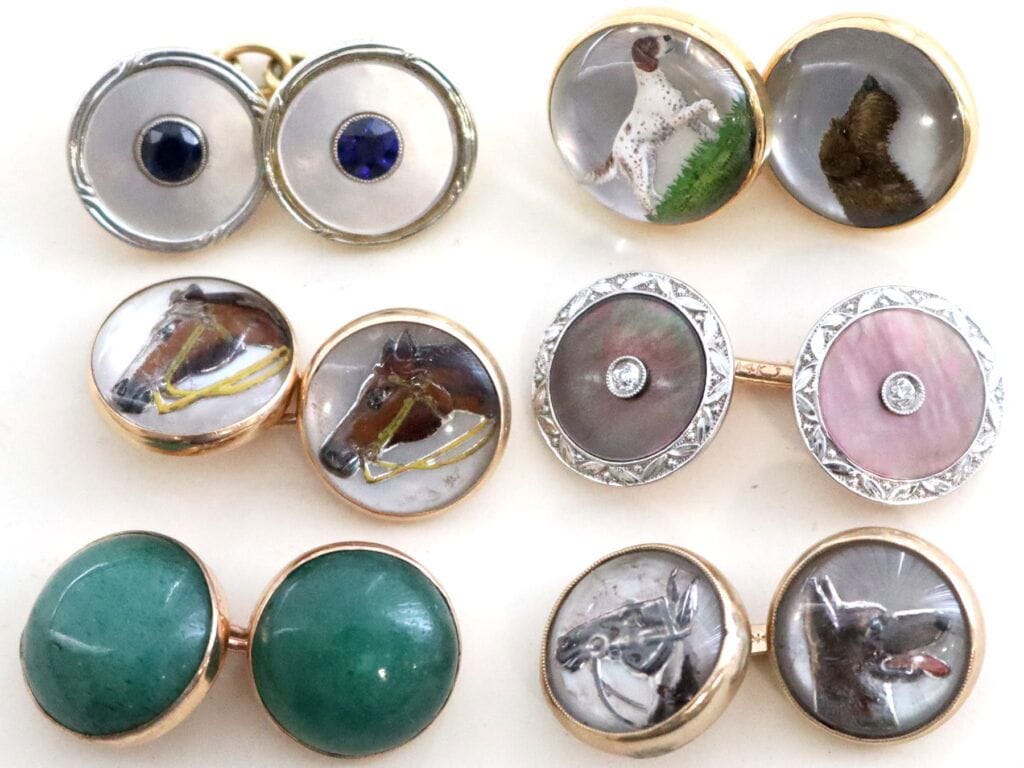
Prior to the 17th century, a cufflink referred to a ribbon that tied the cuff of shirts. In the 1600s, the French cuff became popular amongst royals as a mark of status rather than just functionality. Previously being made of silver, gold and pearl, at the end of the 19th century the colourful Fabergé style, which was made with enamel, was popularised by Edward VII, turning cufflinks into an acceptable fashion accessory for men.
Cufflinks popularity escalated in the 1920s before dipping again between 1930s and 1950s because the popular shirt became one fastened with buttons at the cuff. However, post WW2, gentleman began investing more in accessories and through the decades (minus the 70s) cufflinks became a staple jewellery item. Today cufflinks are very accessible and are worn frequently by those who work in suits, though most people save wearing them for special occasions. A sophisticated and practical item, they have become an excellent gift that can be passed down generations.
Cufflink Eras Explained
Georgian Era Cufflinks
This era is known for its elegance and intricate designs.
Key features:
- Pieces were handcrafted
- 18ct gold was commonly used.
- Gemstones likely had foil-backed or closed-back settings
- Designs were bold, flamboyant and grand
Victorian Era Cufflinks
A vast range of styles were produced during this period.
Key features:
- Exuberant and ostentatious designs
- Serpents were a popular motif used
- Embellished with gemstones
- Gold and silver were frequently used
- Pearls, onyx and black jet reflected the mourning period
- Arts and Crafts and Art Nouveau designs were used
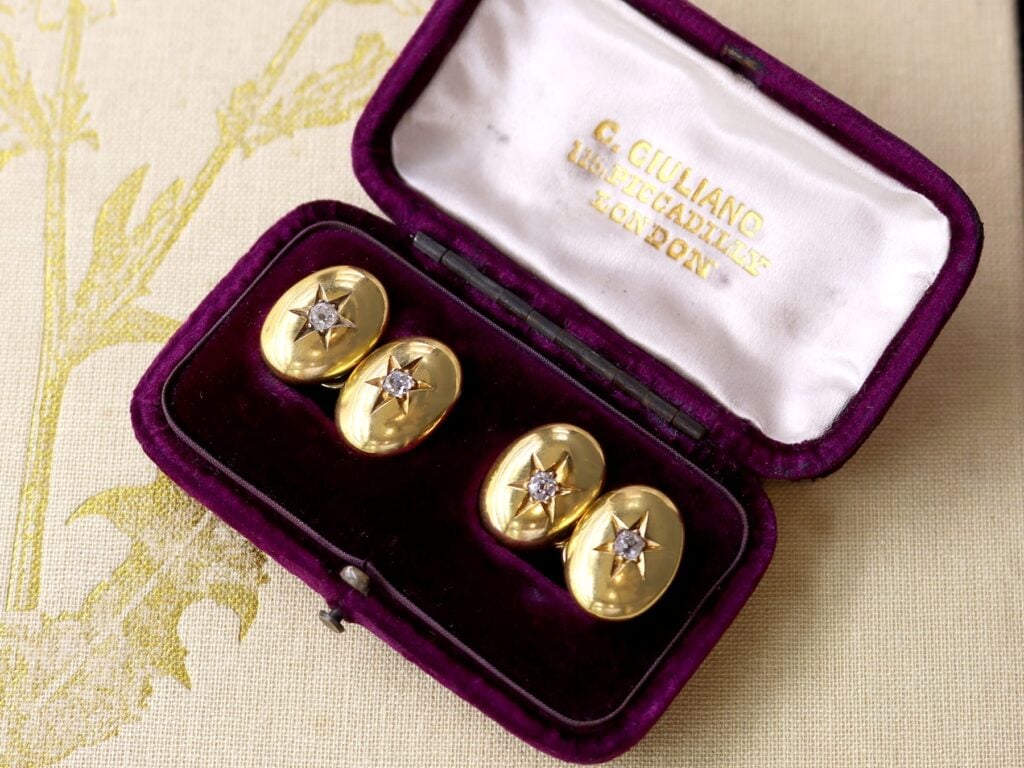
Edwardian Era Cufflinks
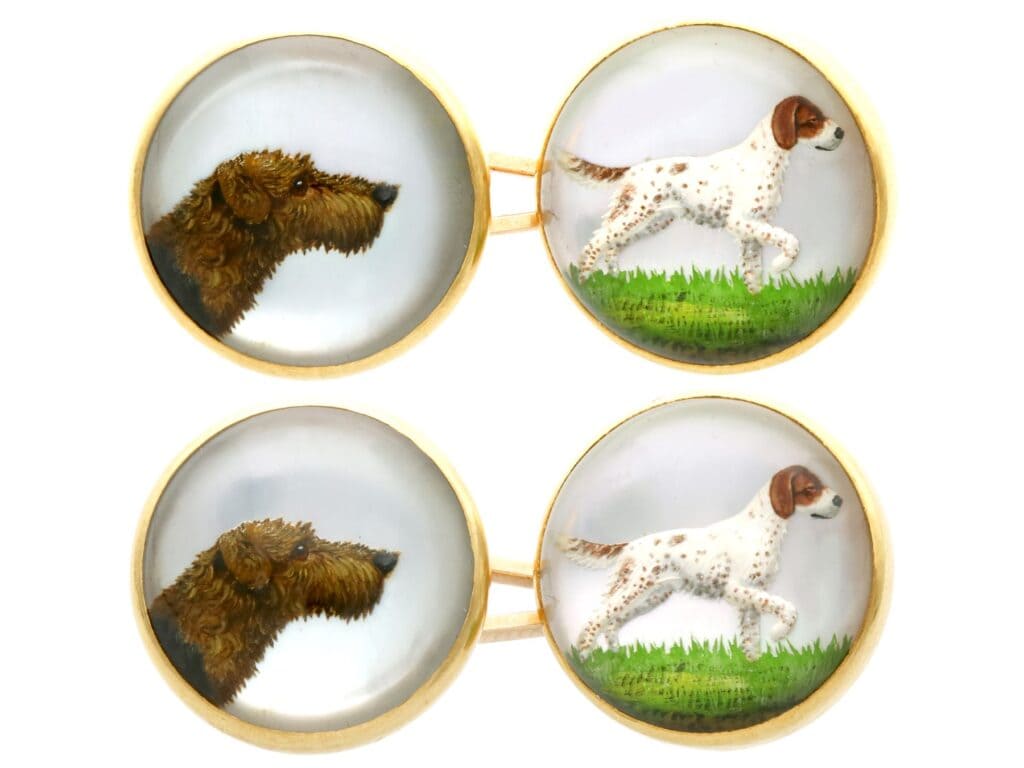
Designs at this time included enamel and gemstones to brighten suits.
Key features:
- Platinum and gold combinations
- Lace designs with filigree style settings
- Swirling and floral motifs
- Engraved and enamelled guilloche cufflinks were popular
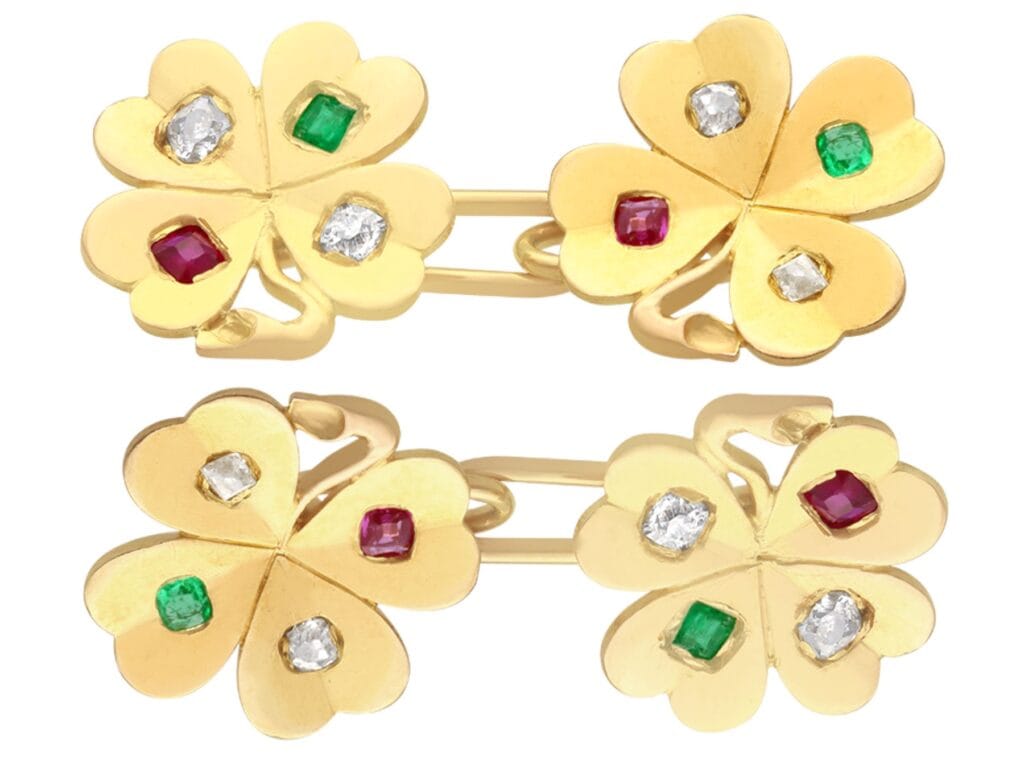
Art Deco Era Cufflinks
An iconic and distinctive style of jewellery was produced in the Art Deco era.
Key features:
- Bold and geometric designs.
- Strong and symmetrical lines
- Monogrammed initials
- Platinum and white gold became fashionable
- Embellished with gemstones
Mid- Century Era Cufflinks
Despite men’s jewellery becoming less frequent after the wars, cufflinks were still sported.
Key features:
- Often were a round gold-toned metal
- Had coloured glass or resin
- Military had a strong influence on designs
- Art Deco designs were popular
- Monogrammed initials, lucky horseshoes, planes, palm trees and pin up girls were among the design themes
Types of Cufflink Styles
Cufflinks are available in a variety of forms; each style suited to different shirts and occasions. Getting to know these styles can help you to choose the right one at the right time.
Cufflink Fastenings
Bean Backs (from 17th century)
One-piece cufflinks with what looked like a small bean on the back.
Finger prongs (from 17th century)
They are generally square with two clips at the back.
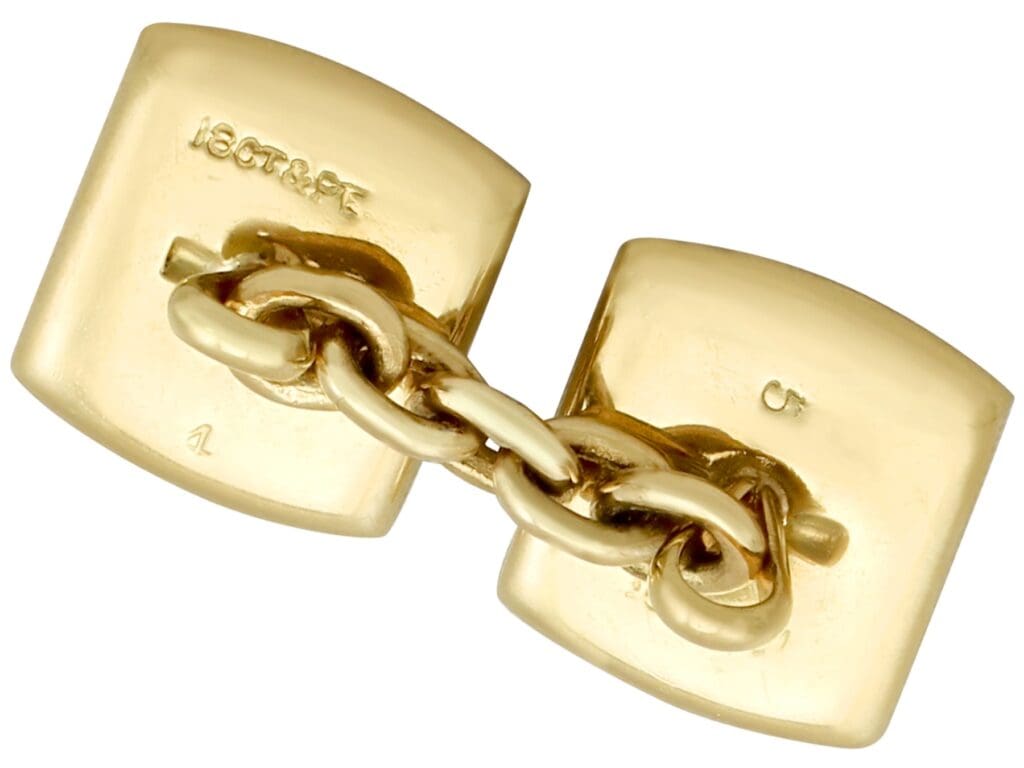
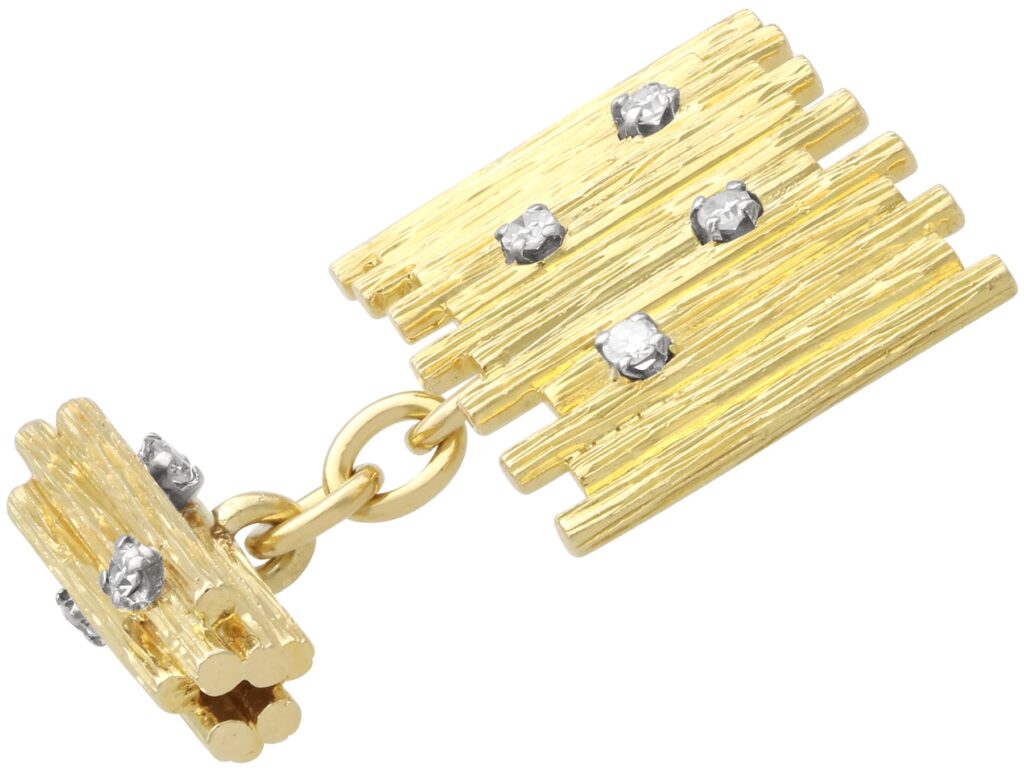
Chain Link Cufflinks
As the name suggests this style sees the two panels held together by a chain.
Why they’re desirable:
- They are a looser fitting
- Often have two identical panels
- The most traditional style
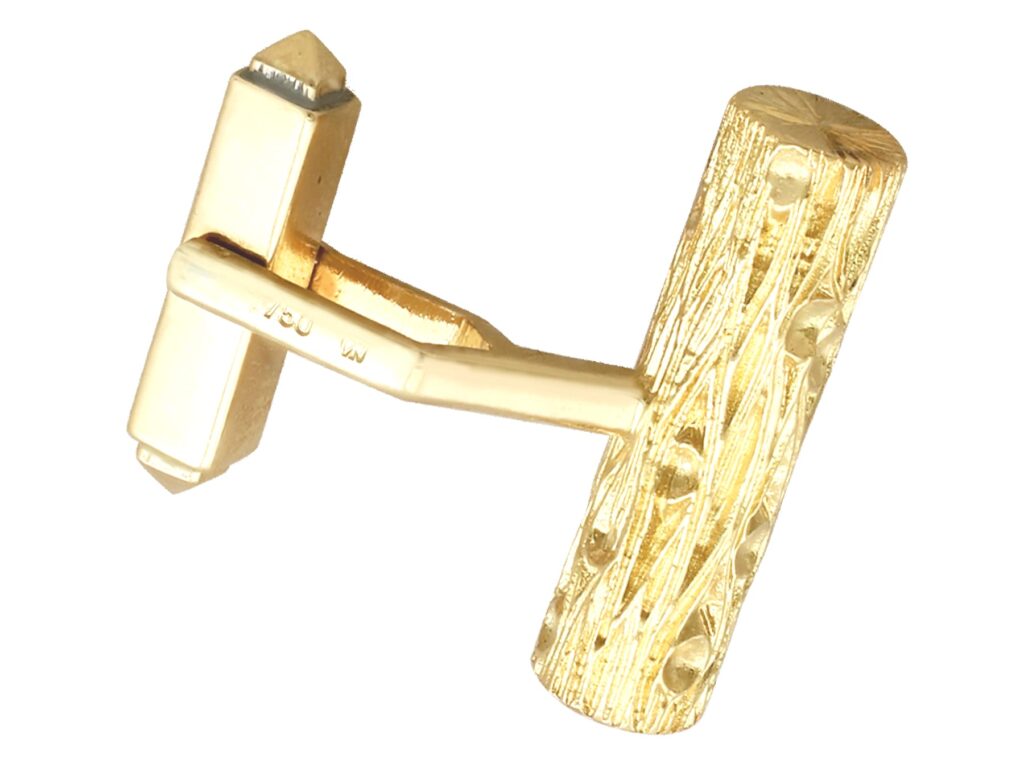
Bullet Back (1930s)
These cufflinks have a hollow frame with a small bar or tube of metal which sits inside the frame which can then be rotated to lock the cufflinks.
Why they’re desirable:
- Easy to fasten
- Accessible as one of the most common styles
- Good durability
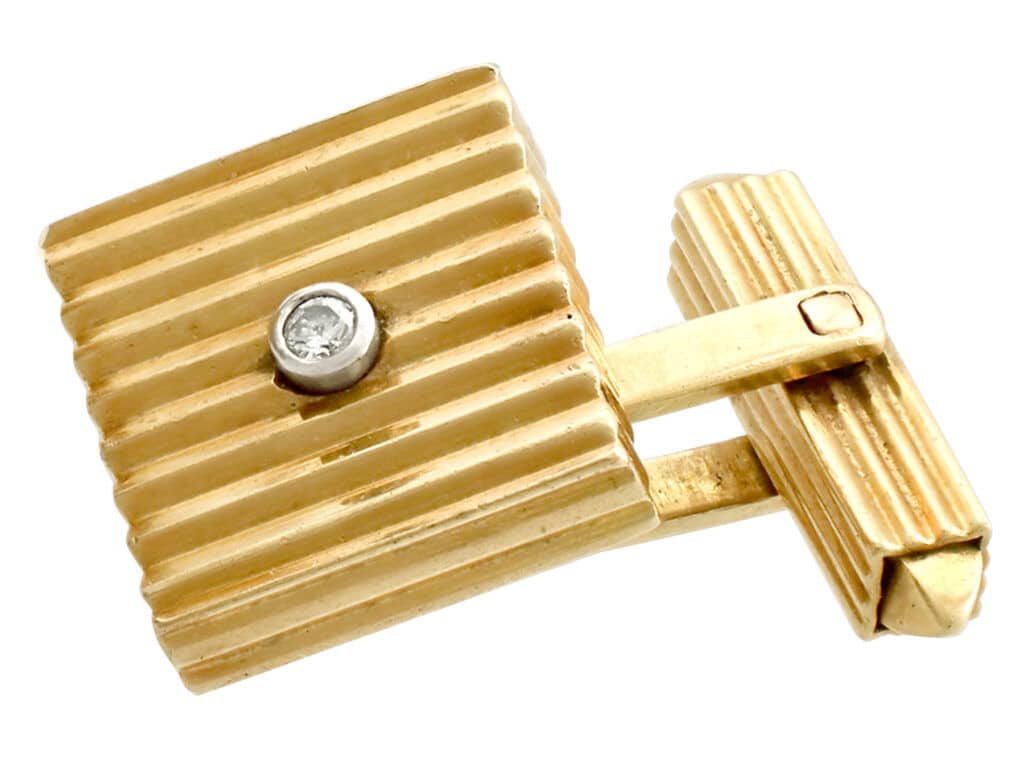
Whale Back (1950s)
This cufflink style has a flat head and straight post and the name of this style comes from there being a ‘whale tail’ at the end that flips flat against the post.
Why they’re desirable:
- Easy to fasten
- Good durability
Ball Return (from 17th century)
These cufflinks have an arched post with a small heavy ball of metal at one end and the decorative face on the other.
Why they’re desirable:
- The ball can be decorated or left plain
- Looser than hinged cufflinks but tighter than chain link cufflinks
Stud or Button Style (17th century for button)
There are no moving parts in this style, just a decorative face attached to a small solid post with a smaller head or backing on the inside. They are put into place by tilting the smaller head and working it through the button holes.
Why they’re desirable:
- Once in are secure
- Good durability
Gemstones Found in Antique & Vintage Cufflinks
Gemstones are a key part of a cufflinks design, injecting colour, personality and value. Quite often you will see many antique and vintage cufflinks featuiring the ever popular diamond gemstone, however ther are a few other sought after gemstones to include in cufflink design.
Onyx Cufflinks
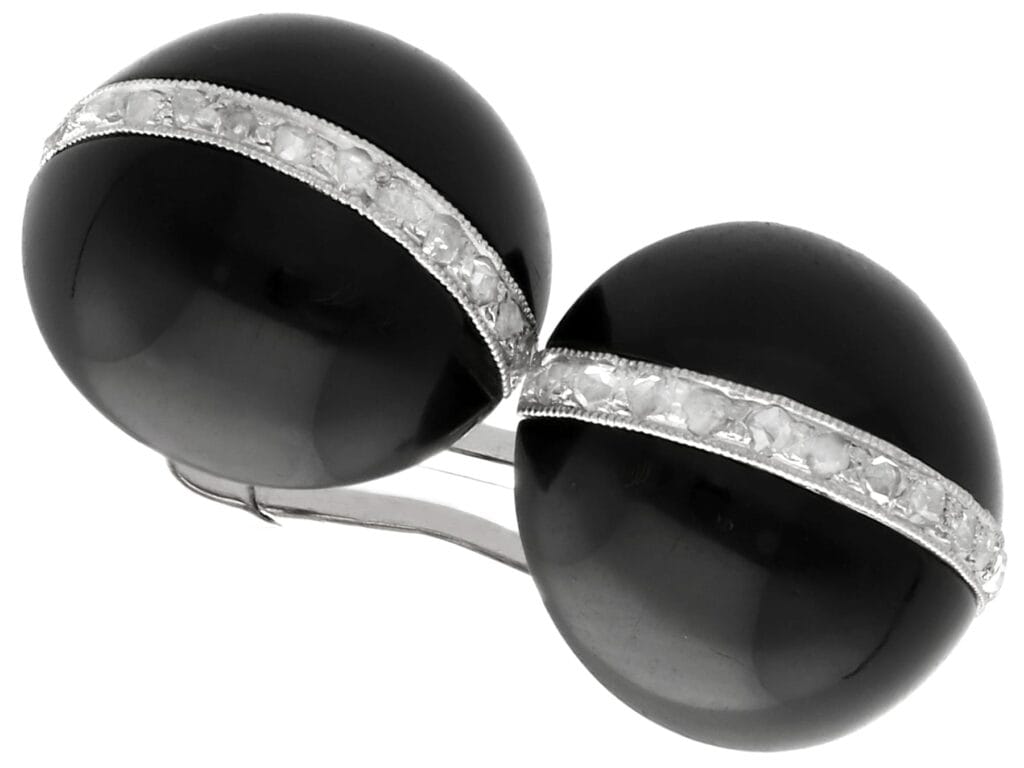
Gemstones are a key part of a cufflinks design, injecting colour, personality and value. Here are a few of the most sought-after stones used.
Mother of Pearl Cufflinks
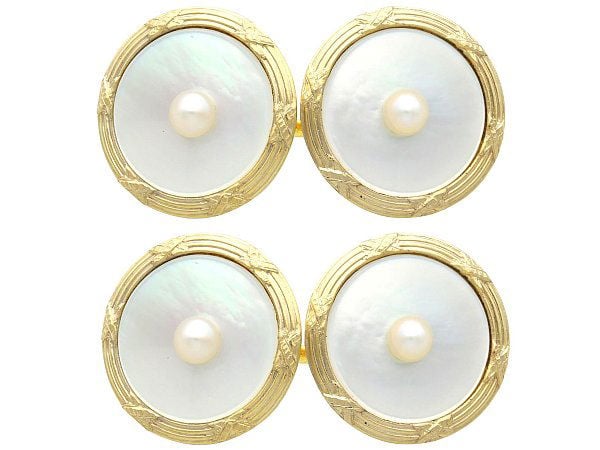
A very elegant stone which provides a soft lustre and extra sophistication.
Sapphire Cufflinks
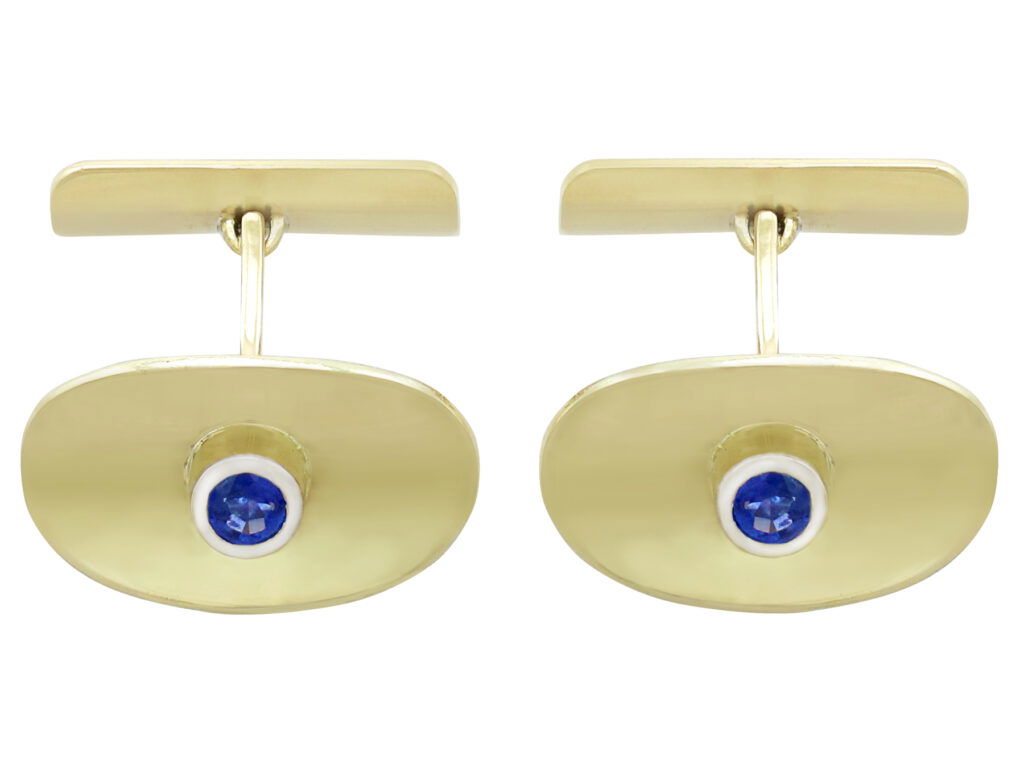
September’s birthstone, these are one of the most popular gemstones, available in a range of hues from deep blue to pink to yellow.
Metals Used in Antique & Vintage Cufflinks
The metals that cufflinks are crafted in can sometimes help to indicate the era.
Gold Cufflinks
- When cufflinks first emerged, gold was most often used.
- Yellow gold was prominent in Georgian and Victorian eras
- In the 1920s white gold became on trend
Platinum Cufflinks
- Became fashionable in the roaring 20s
What Makes Antique Cufflinks Superior?
Antique cufflinks are hand crafted meaning no two are the same. Some of the features collectables value include are:
- Hand engraving
- Strong craftmanship
- Precision enamelwork
- Notable brands
- Excellent condition
Unlike modern examples, antique cufflinks have stood the test of time and have been made to last a lifetime.
How to Identify Authentic Antique Cufflinks
Making sure your antique cufflinks are genuine examples requires experience and analysis of the following:
- Style and design
- Gemstone cut and setting
- Metal composition
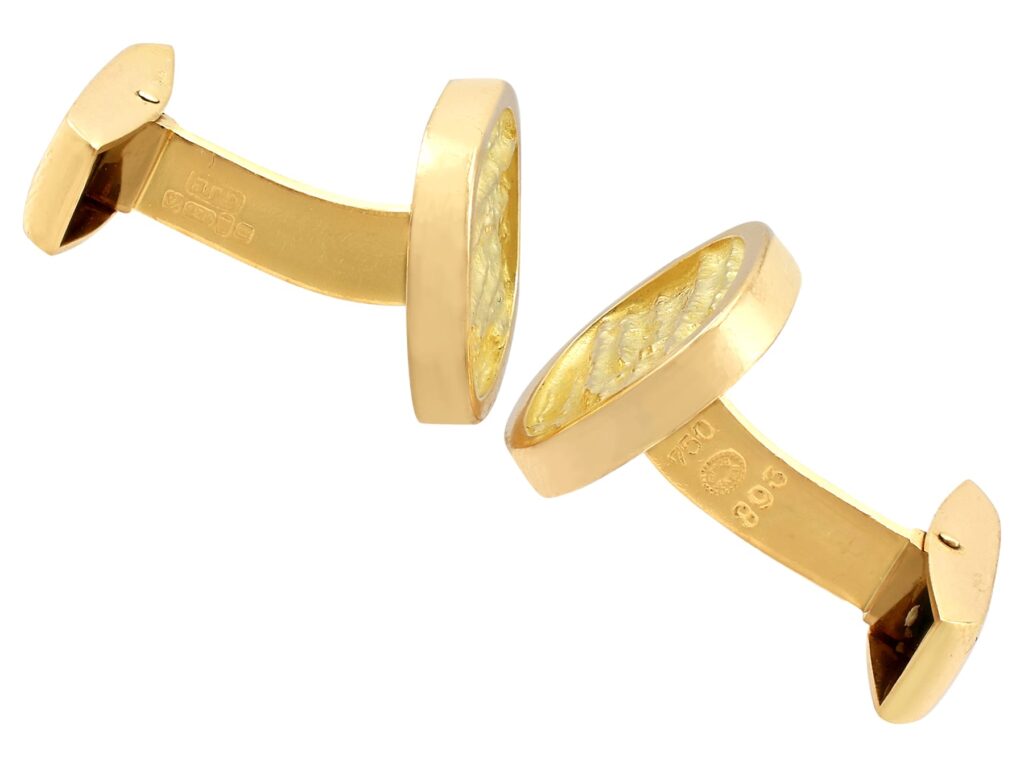
- Hallmarks (if present) – if no hallmarks you can use tools to analyse the metal for you.
- Construction methods
There are lots to consider when assessing the cufflinks and we recommend you speak to an expert in the field to ensure what you are purchasing is what it states.
Antique and vintage cufflinks are both stylish and practical accessories, with unique designs, a variety of materials and a characterful history. Regardless of your style you can find a pair of antique or vintage cufflinks that suit you from the many distinctive eras. There is a pair for all tastes and every occasion. They remain a staple sought after accessory and a wonderful luxury gift.