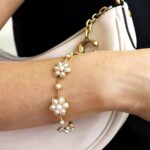
Victorian jewellery is one of the most fascinating chapters in jewellery history, and once you know how to spot the different periods, it becomes much easier to understand why certain antique pieces look the way they do. Spanning Queen Victoria’s reign from 1837 to 1901, Victorian jewellery is usually divided into three key phases: Early Victorian, Mid Victorian, and Late Victorian. Each period reflected changes in fashion, society, technology, and even the Queen’s personal life.
If you have ever browsed antique jewellery and wondered why some Victorian pieces feel romantic and delicate, while others look dark, bold, or unexpectedly artistic, this is why. Victorian jewellery remains one of the most collectible and characterful areas of antique jewellery, precisely because it evolved so dramatically over the decades.
Why Victorian Jewellery Changed So Much
Unlike some jewellery eras that keep a fairly consistent aesthetic, Victorian jewellery changed with the times. Queen Victoria herself had enormous influence over fashion, and major events during her reign shaped what people wore. Love, loss, industrial progress, travel, and new artistic movements all left their mark on jewellery design.
That is what makes Victorian jewellery so exciting. It is not just beautiful, it is a visual record of emotion, status, taste, and history.
Early Victorian Jewellery (Romantic), 1837–1860
The Early Victorian period, often called the Romantic period, is exactly what it sounds like. Jewellery from these years was sentimental, decorative, and full of symbolism. This was the age of love tokens, personal gifts, and meaningful motifs, with many designs created to express affection, devotion, or memory.
Common motifs included hearts, flowers, bows, birds, serpents, and hands. The serpent became especially fashionable after Prince Albert gave Queen Victoria a snake engagement ring, making it a symbol of eternal love. Lockets, brooches, and rings were often highly personal, sometimes containing woven hair, miniatures, or hidden inscriptions.
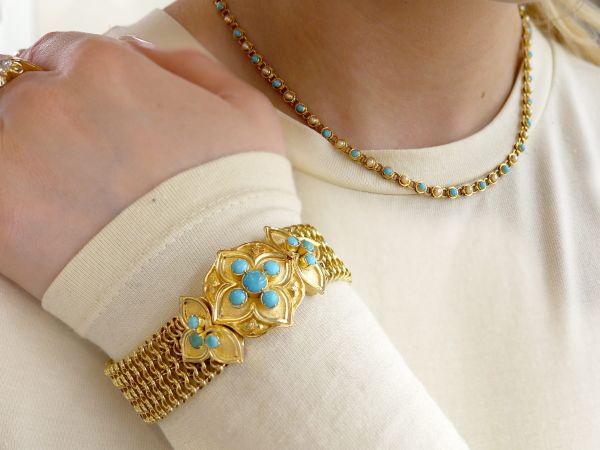
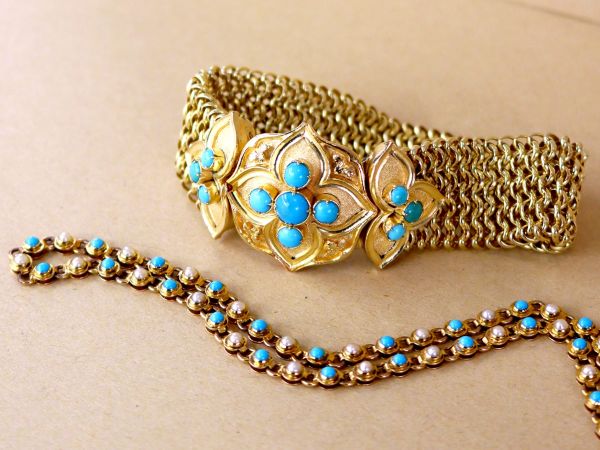
This period is known for intricate craftsmanship and rich yellow or rose gold. Gemstones such as garnets, turquoise, seed pearls, and amethysts were especially popular, and many pieces have a soft, feminine feel. There is often a lightness and sweetness to Early Victorian jewellery, even when the detail is elaborate.
If you love antique jewellery with symbolism and story, this is the period that tends to steal hearts first.
Mid Victorian Jewellery (Grand), 1860–1885
The Mid Victorian period, also known as the Grand period, brought a noticeable shift in mood. After the death of Prince Albert in 1861, Queen Victoria entered a long period of mourning, and fashion followed. Jewellery became heavier, darker, and more dramatic, with mourning jewellery playing a major role in the era.
Black materials such as jet, onyx, black enamel, and vulcanite became widely used, especially in pieces associated with grief and remembrance. Lockets, brooches, and rings often carried memorial meaning, and sentimental jewellery remained important, but the visual tone became much more serious.
At the same time, this period was also marked by increasing grandeur. Archaeological discoveries and international influences inspired bold designs drawing from ancient Egypt, Greece, Rome, and the Renaissance. Jewellery became more substantial in scale, with large brooches, cuffs, and statement pieces gaining popularity. Decorative detail was often richer, more architectural, and more commanding than in the earlier Romantic years.
This is the Victorian jewellery period that feels the most dramatic. It can be sombre, powerful, and deeply expressive all at once. For collectors, Mid Victorian jewellery often has a striking presence that makes it instantly memorable.
Late Victorian Jewellery, 1885–1901
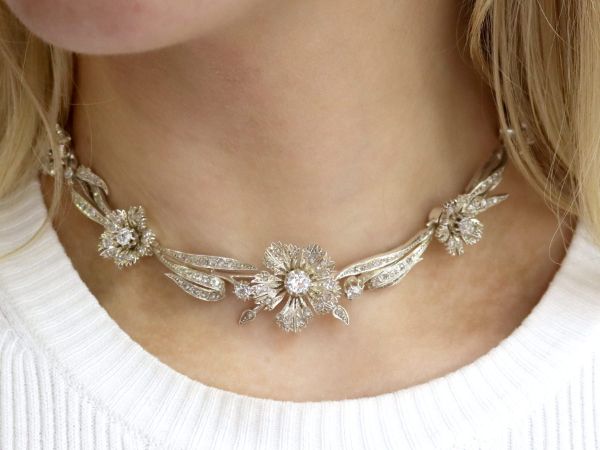
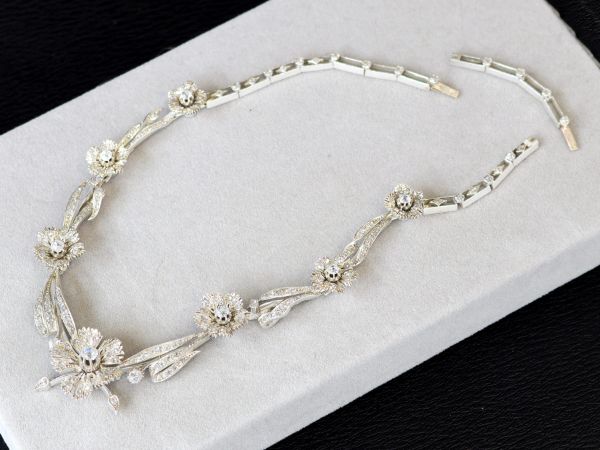
By the Late Victorian period, the mood changed again. This era is often called the Aesthetic period, and it reflects a move toward lighter, more playful, and more artistic jewellery. The heaviness of the Grand period began to soften, and designs became more refined and elegant.
Naturalistic motifs remained popular, but they were often treated in a more stylised and delicate way. Stars, crescents, swallows, insects, and floral forms became fashionable, and there was growing interest in beauty for beauty’s sake rather than purely sentimental symbolism. Diamonds and pearls became especially important, helped by improved gemstone supply and advances in jewellery manufacturing.
Late Victorian pieces can feel surprisingly modern. Their cleaner lines, airy designs, and graceful sparkle often appeal to buyers who want antique jewellery that still feels easy to wear today. This period also overlaps with the beginning of the transition into Edwardian taste, so some designs hint at the lightness and elegance that would define the next era.
If Early Victorian is romantic and Mid Victorian is dramatic, Late Victorian is where antique jewellery starts to feel a little more effortless.
How to Tell the Difference Between the Three Periods
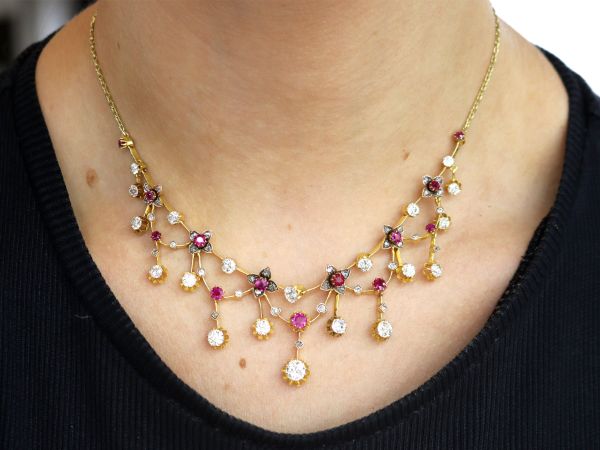
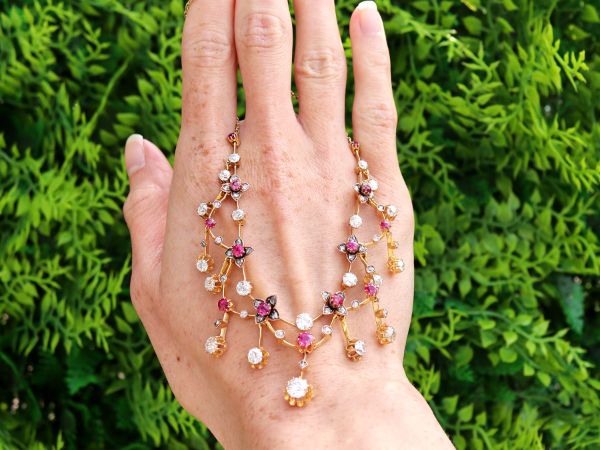
A simple way to think about it is this. Early Victorian jewellery is sentimental and ornate. Mid Victorian jewellery is bold, heavy, and often linked to mourning or historical revival styles. Late Victorian jewellery is lighter, more artistic, and increasingly refined.
Of course, antique jewellery does not always fit neatly into a box, and some pieces show overlap between periods. That is part of the fun. Learning the broad characteristics helps you understand the style, but every genuine Victorian piece still has its own personality.
Why Victorian Jewellery Still Matters Today
Victorian jewellery continues to captivate modern collectors because it offers something many contemporary pieces cannot: history, individuality, and emotional depth. Whether you are drawn to the symbolism of the Romantic period, the intensity of the Grand period, or the elegance of the Aesthetic period, there is a Victorian style for almost every taste.
Exploring Victorian jewellery is really about exploring how fashion reflects life. Love, grief, beauty, and identity are all there, captured in gold, gemstones, and remarkable craftsmanship. For anyone wanting to discover authentic antique examples, AC Silver offers a beautifully curated collection of Victorian jewellery that brings each of these periods to life.