From Victorian Elegance to Modern Jewellery Design
Fire opal has never been a background gemstone. It has too much warmth, too much colour, too much personality for that. With shades that move from golden yellow to bright orange and deep, glowing red, fire opals bring a very different kind of beauty to jewellery. They do not have the icy brilliance of diamonds or the formal richness of sapphires. Instead, they feel warmer, rarer and a little more unexpected.
Across jewellery history, fire opals have moved in and out of fashion, but they have never lost their charm. Victorian jewellers loved their romantic glow, Art Nouveau designers embraced their natural warmth, and Art Deco makers used them to create contrast and drama. Even today, fire opal jewellery continues to appeal to collectors and designers who want gemstone jewellery with colour, history and individuality.
Part of the appeal is that fire opal feels instantly recognisable. It does not need to be explained for long. Once you see that fiery colour, you understand why jewellers have returned to it again and again.
A Gemstone with Ancient Roots
The story of fire opal begins long before the great jewellery houses and antique display cabinets. Some of the finest fire opals have traditionally come from Mexico, where the gemstone was treasured by the Aztecs and other pre-Columbian cultures. Its bright orange and red tones were associated with fire, the sun and spiritual power, which makes perfect sense when you see the way a good fire opal seems to glow from within.
Unlike some gemstones that travelled widely across ancient trade routes, fire opals remained closely linked to Central America for centuries. This gave them a sense of rarity and mystery, especially once European collectors began to encounter them.
When Spanish explorers arrived in Mexico in the sixteenth century, fire opals gradually made their way into Europe. At first, they were not as widely used as diamonds, rubies, sapphires or emeralds, which dominated aristocratic jewellery collections. Their colour was more unusual, their origins more exotic, and their appearance less familiar. Over time, though, that difference became exactly what made them desirable.
Victorian Romance and the Warmth of Gold
By the Victorian era, jewellery had become deeply expressive. Pieces were often chosen not only for beauty, but for meaning. Sentimental motifs, symbolic gemstones and romantic designs all played an important role, making fire opal a natural fit for the period.
The warm tones of fire opal looked especially beautiful in yellow gold, which was widely used throughout Victorian jewellery. Its colour gave rings, brooches, pendants and bracelets a soft but noticeable richness, particularly when paired with diamonds, seed pearls or intricate goldwork. A fire opal did not need to dominate a design to make it memorable. Even a smaller stone could bring warmth and feeling to a piece.
There was also something wonderfully romantic about the gemstone itself. Its fiery shades could suggest passion, affection and creativity, all themes that suited Victorian taste perfectly. While diamonds offered brilliance and pearls brought softness, fire opals added emotion and colour.
Victorian fire opal jewellery remains highly sought after today because it captures both the craftsmanship of the period and the unusual beauty of the stone. It feels decorative, personal and full of history, which is exactly why collectors are still drawn to it.
Art Nouveau and the Beauty of Movement
If Victorian jewellery gave fire opal sentiment, Art Nouveau gave it freedom.
The Art Nouveau movement, which flourished from the 1890s into the early twentieth century, changed the mood of jewellery design completely. Instead of rigid shapes and formal arrangements, jewellers began looking to the natural world. Flowers, insects, leaves, flowing hair, birds and mythical figures appeared in pieces that felt almost alive.
Fire opal suited this new language beautifully. Its colour had an organic quality, like a glowing petal, a flicker of flame or a drop of honey caught in gold. It worked especially well alongside enamel, pearls, moonstones and curving metalwork, becoming part of a larger artistic composition rather than simply a gemstone placed into a setting.
This is why Art Nouveau fire opal jewellery can feel so enchanting. The stone was not just used for sparkle. It was used for mood. Designers understood that fire opal could bring warmth, light and movement to their work, which made it perfect for the dreamlike, nature-inspired pieces of the period.
Many collectors consider Art Nouveau examples among the most beautiful antique fire opal jewellery ever made, partly because the gemstone and the design style seem so naturally connected.
Art Deco: Colour Meets Contrast
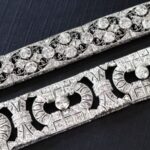
The arrival of Art Deco brought a sharper, more glamorous energy. Jewellery became sleeker, stronger and more architectural, with clean lines, geometric shapes and bold contrasts replacing the flowing forms of Art Nouveau.
Diamonds and platinum were major features of the period, but coloured gemstones still had an important role to play. Fire opal brought warmth into a world often dominated by white metals and icy brilliance. Against diamonds, onyx or crisp geometric settings, the vivid orange of a fire opal could look incredibly striking.
Art Deco fire opal jewellery often feels more dramatic than romantic. The gemstone’s colour gives the piece impact, while the structure of the design keeps it polished and refined. This contrast is part of what makes these pieces appealing to modern collectors. They feel rooted in history, yet still sharp enough to be worn today.
A fire opal can soften a geometric design without making it feel old-fashioned. It adds colour, but not in a predictable way. For those who love Art Deco jewellery but want something less familiar than sapphire or emerald, fire opal offers a beautiful alternative.
Vintage Fire Opals and Post-War Jewellery
After the Second World War, jewellery design became more varied and expressive. The bold gold jewellery of the 1940s, the polished glamour of the 1950s and the freer, more experimental styles of the 1960s and 1970s all gave colourful gemstones new opportunities to shine.
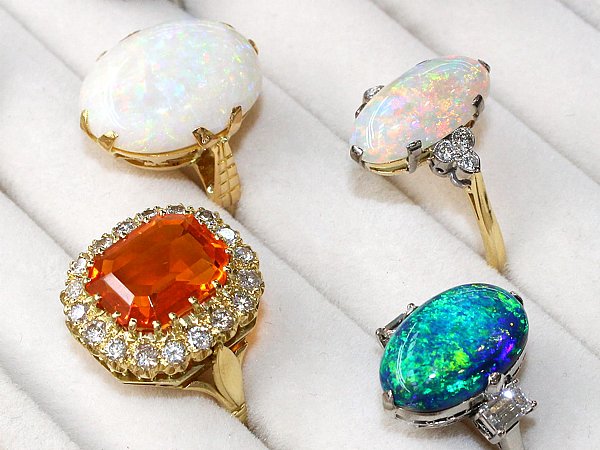
Fire opals appeared in cocktail rings, statement pendants and decorative designs where their warm colour could take centre stage. These vintage pieces often feel less formal than earlier antique jewellery, but they still carry a strong sense of craftsmanship and character.
This is where fire opal jewellery becomes especially fun to collect. Each era uses the gemstone slightly differently. In one piece, it might feel romantic and ornate. In another, bold and sculptural. In another, relaxed and expressive. The colour remains recognisable, but the setting changes the whole mood.
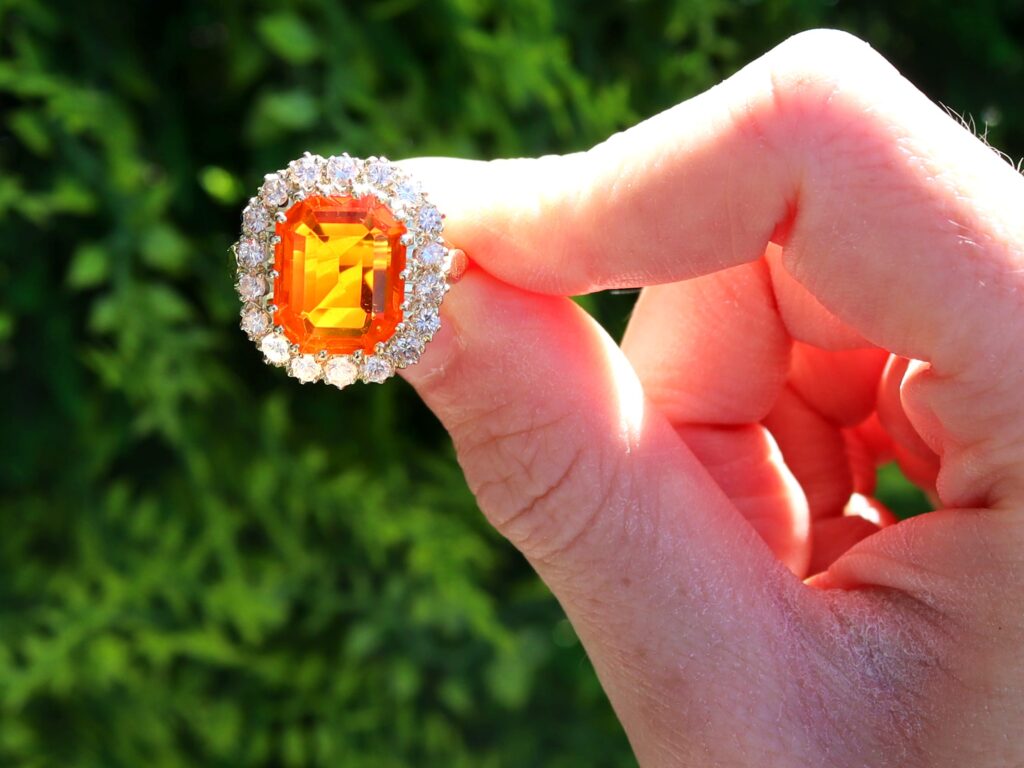
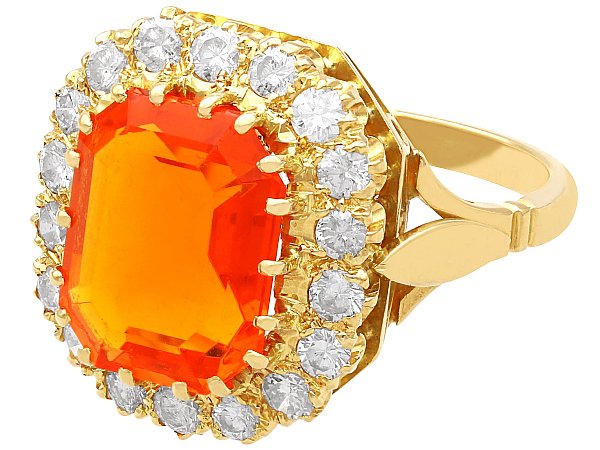
A piece such as this vintage 4.92ct fire opal and 1ct diamond ring in 18k gold shows how beautifully fire opal works in a statement ring. The stone brings warmth and presence, while the diamonds add the kind of classic brilliance that makes the colour feel even richer.
Fire Opal in Modern Jewellery Design
Contemporary designers continue to admire fire opal because it feels distinctive without needing to be overworked. A simple setting can allow the gemstone’s colour to speak for itself, while a more elaborate design can lean into its dramatic warmth.
Modern fire opal jewellery often uses cleaner lines than antique pieces, placing the focus on the stone’s natural colour. Diamonds are still a popular pairing, as they create contrast between cool sparkle and fiery warmth. Yellow gold remains a natural match too, enhancing the orange and red tones that make fire opal so appealing.
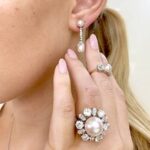
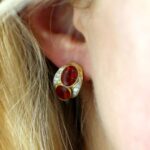
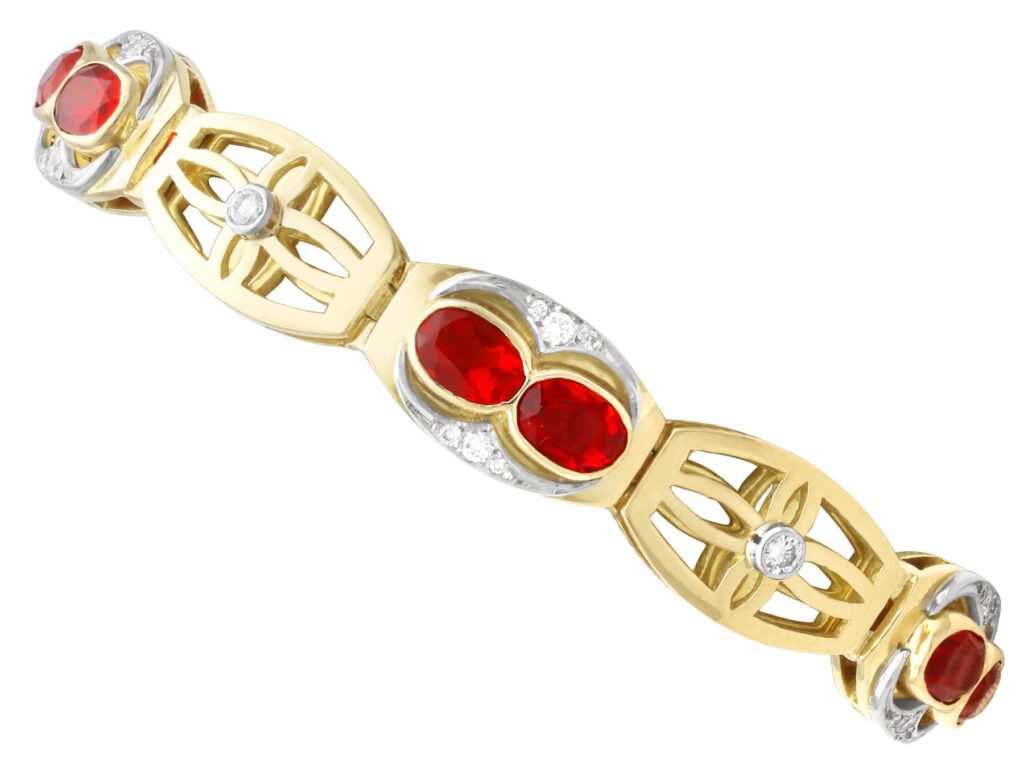
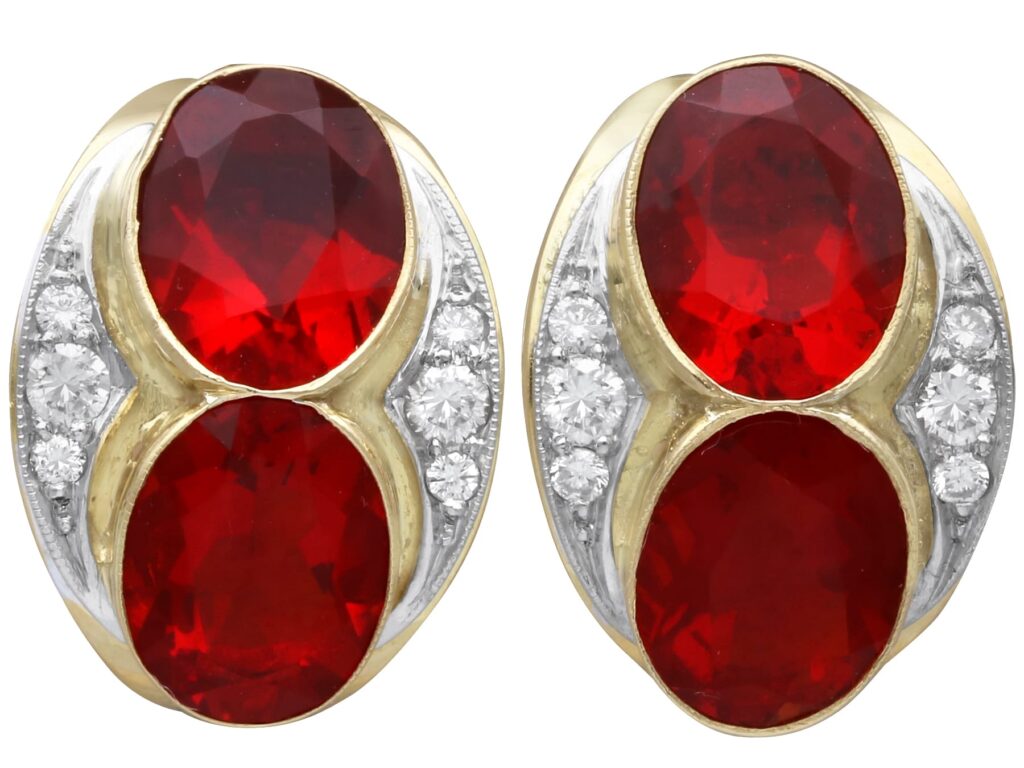
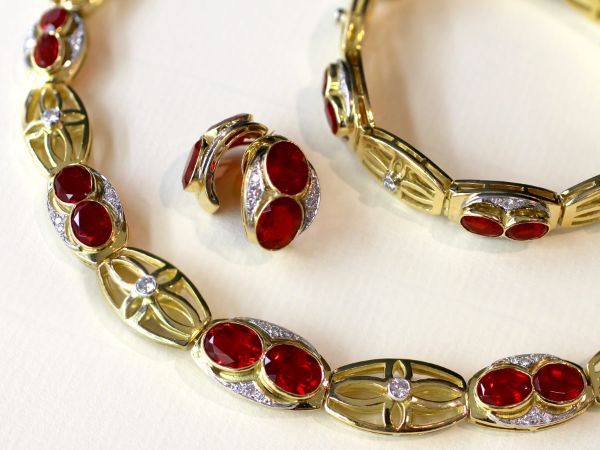
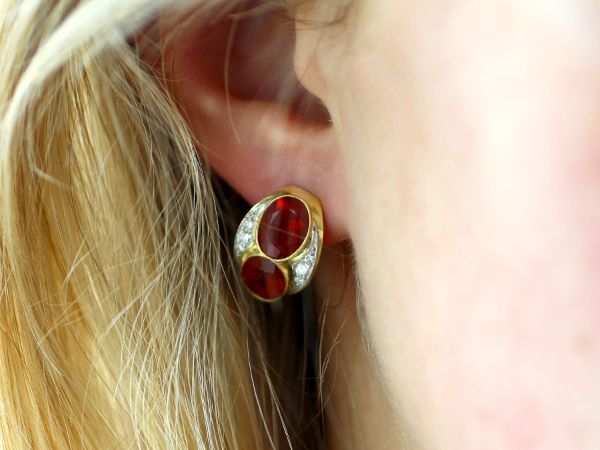
At the same time, antique and vintage fire opal jewellery has become increasingly attractive to collectors who want pieces with more personality than modern mass-produced designs. A complete suite, such as this vintage fire opal jewellery set in 18k yellow gold, has a rare sense of occasion. Matching gemstone jewellery sets are not easy to find, and when the stones are as distinctive as fire opals, the effect feels even more special.
Why Fire Opals Still Feel Relevant
Fashion changes, jewellery trends shift, and certain gemstones move in and out of the spotlight. Fire opal, however, has a lasting appeal because it offers something many buyers are looking for now: individuality.
It is colourful but not obvious. Luxurious but not predictable. Historic, yet still wearable. No two fire opals look exactly alike, which gives every piece of opal jewellery its own character. For collectors, that individuality matters. For modern jewellery lovers, it makes a piece feel personal.
Fire opals also sit beautifully between classic and unusual. They belong to the opal family, so they have that familiar sense of romance and mystery, but their fiery body colour gives them a completely different personality from traditional opals. They are ideal for anyone who loves gemstone jewellery with warmth, depth and a little drama.
From ancient Mexico to Victorian romance, Art Nouveau artistry, Art Deco glamour and modern jewellery design, fire opals have had a rich and colourful journey. Each period has found a different way to celebrate them, whether through symbolic gold jewellery, flowing natural forms, geometric contrast or clean contemporary settings.
That is the beauty of fire opal jewellery. It adapts, but it never disappears into the design. Its colour always leaves an impression.
For anyone drawn to antique jewellery, vintage gemstones or opal jewellery with a more unusual character, fire opal is a wonderful place to look. It carries history, warmth and individuality in equal measure, proving that some gemstones do not need to follow fashion to remain unforgettable.