When people think of diamond jewellery, their minds usually go straight to rings, bracelets or necklaces. Diamond cufflinks, by contrast, are often overlooked, despite being one of the most elegant and characterful ways to wear precious stones. Sitting neatly at the wrist, they offer a flash of brilliance that feels refined rather than excessive, making them an ideal choice for those who appreciate understated luxury.
There is something especially compelling about diamond cufflinks because they combine function with ornament so effortlessly. They are not simply decorative objects, but working accessories that complete a shirt and elevate tailoring at the same time. In many ways, that is what makes them so appealing. They do not demand attention in the same way as larger pieces of jewellery, yet they reveal taste, confidence and discernment in a far subtler manner.
Diamond cufflinks hold even greater appeal because so many antique and vintage examples carry the design language of their era so beautifully. Rather than feeling generic or mass produced, these pieces often reflect the craftsmanship, materials and proportions that made historical jewellery so enduring. Whether chosen for a wedding, a formal event or a personal collection, antique diamond cufflinks offer far more than surface sparkle. They bring with them history, individuality and a sense of permanence that modern accessories often lack.
Why Diamond Cufflinks Deserve More Attention
Part of the charm of diamond cufflinks lies in their restraint. They allow diamonds to be worn in a way that feels sophisticated and measured, rather than overtly showy. Positioned at the cuff, they catch the light naturally through movement, offering brief moments of brilliance that enhance an outfit without overwhelming it. This makes them especially appealing for those who favour classic style and careful detail over obvious display.
They are also remarkably versatile. Diamond cufflinks can bring polish to formal eveningwear, refinement to wedding attire and quiet distinction to professional dressing. Because they sit within the structure of tailoring, they feel integrated into the overall look rather than added on as an afterthought. That balance between practicality and elegance is precisely why they remain such an underrated accessory.
A Brief History of Diamond Cufflinks
Cufflinks emerged as shirt making evolved and men’s dress became increasingly structured. As cuffs moved away from ribbon ties and towards buttonholes, decorative links became both practical and fashionable. Over time, jewellers began creating cufflinks in precious metals and incorporating gemstones, turning a simple fastening into a small but significant expression of style.
Diamonds became particularly popular in cufflink design during the late nineteenth and early twentieth centuries, when fine dressing placed increasing emphasis on accessories. Edwardian jewellers favoured delicacy and precision, often using platinum to enhance the brightness of diamonds. Art Deco design later introduced stronger geometry, contrast and symmetry, giving cufflinks a more architectural quality. Mid-century styles, meanwhile, often balanced sleekness with subtle glamour, resulting in pieces that remain highly wearable today.
This historical evolution is part of what makes antique and vintage diamond cufflinks so appealing. They are not only beautiful objects, but miniature reflections of the periods in which they were made.
Why Antique and Vintage Diamond Cufflinks Stand Apart
Modern cufflinks can certainly be elegant, but antique and vintage pieces often possess a character that is difficult to reproduce. Their appeal lies not only in their materials, but in the quality of workmanship behind them. Earlier pieces were frequently created with greater attention to detail, and even relatively small accessories such as cufflinks were designed with care and balance in mind.
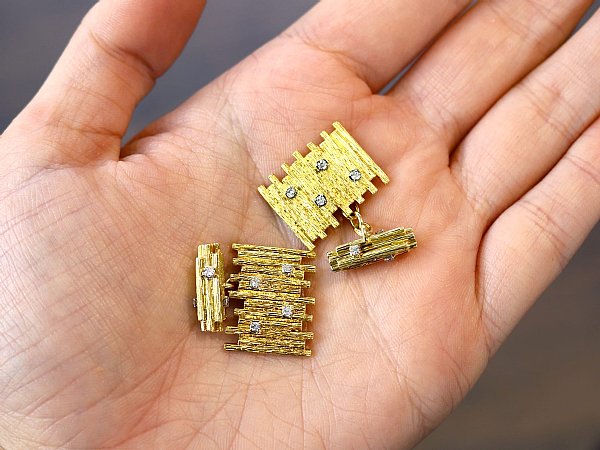
There is also the matter of individuality. Antique diamond cufflinks often feature design elements that feel distinctive today, whether through unusual metal combinations, hand-finished surfaces or period-specific settings. They do not feel interchangeable, which is precisely why collectors and buyers are so often drawn to them.
For many, there is also a sustainability aspect to choosing antique jewellery. Investing in a pre-owned piece means appreciating and preserving an object that already exists, rather than contributing to newly manufactured production. In the case of diamond cufflinks, this adds another layer of value, allowing the wearer to enjoy something both beautiful and enduring.
The Enduring Appeal of Classic Diamond Cufflink Styles
Some diamond cufflinks make their impression through simplicity. Designs centred around a clean, polished setting and a well-placed diamond often have a timelessness that never feels dated.
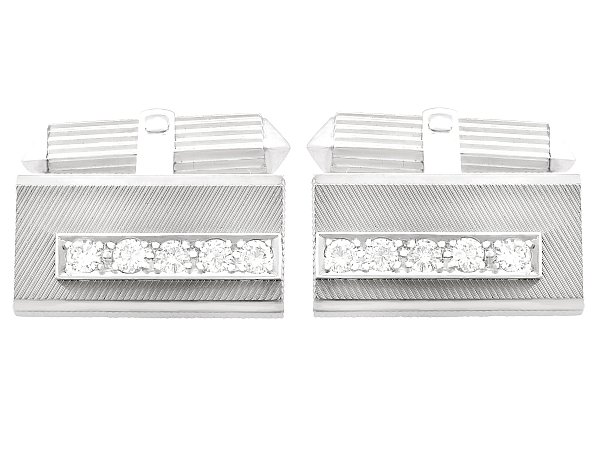
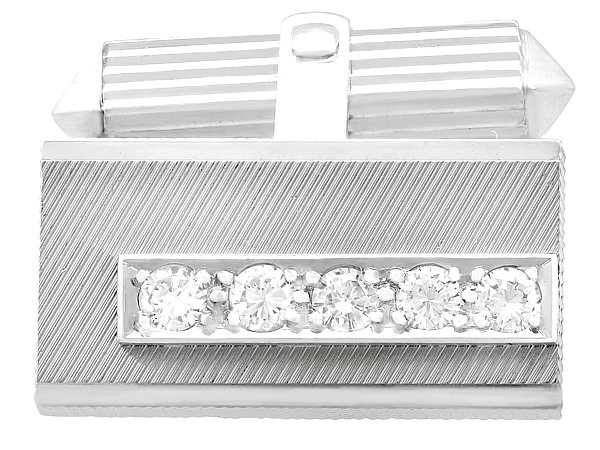
A wonderful example is the vintage pair set with approximately 1.00 carat of diamonds in 18ct white gold. Their design is elegant and assured, with enough brilliance to feel luxurious while remaining refined enough for classic formalwear. They are the kind of cufflinks that work just as well for a wedding as they do for an important evening event.
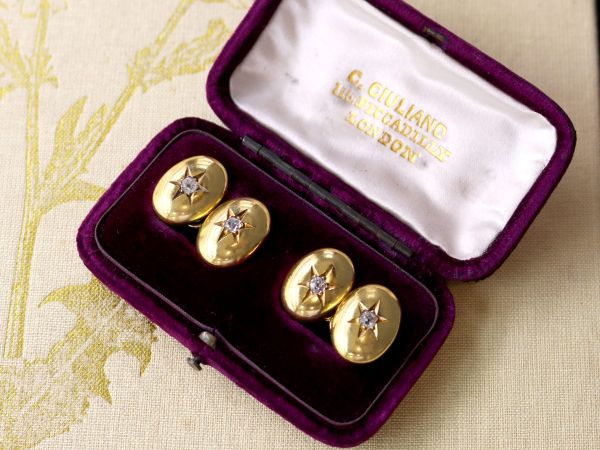
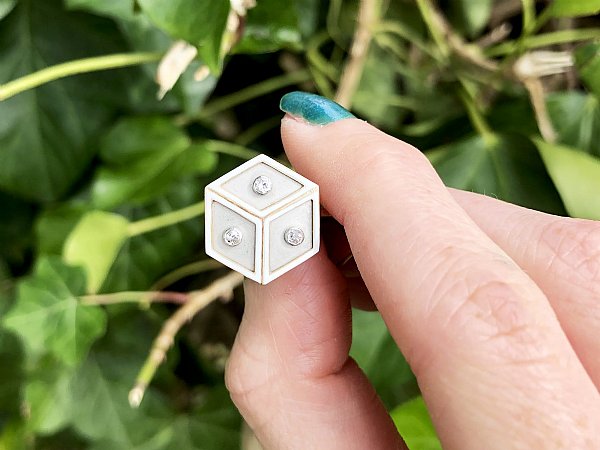
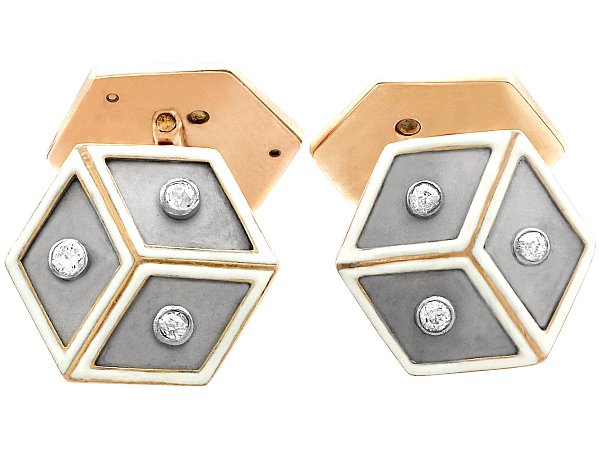
Other examples reveal the influence of a particular design period more clearly. The antique French cufflinks dating to around 1930, set with diamonds in platinum on 14ct rose gold, have a distinctly Art Deco sensibility. The contrast between the soft warmth of rose gold and the crisp brightness of platinum creates a beautiful sense of balance, while the overall composition reflects the symmetry and sophistication associated with the period. Pieces like these appeal not only because they are visually striking, but because they carry the unmistakable elegance of historical design.
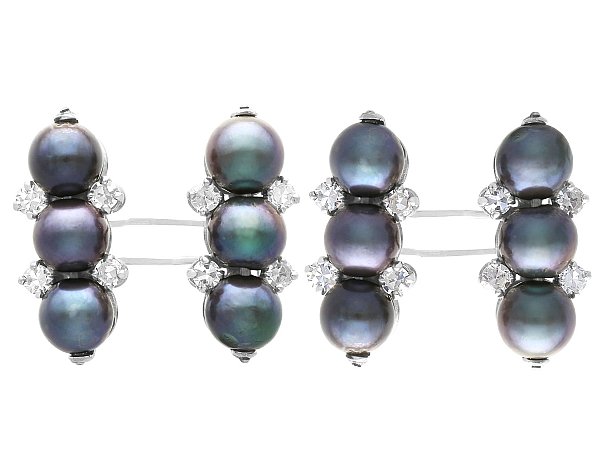
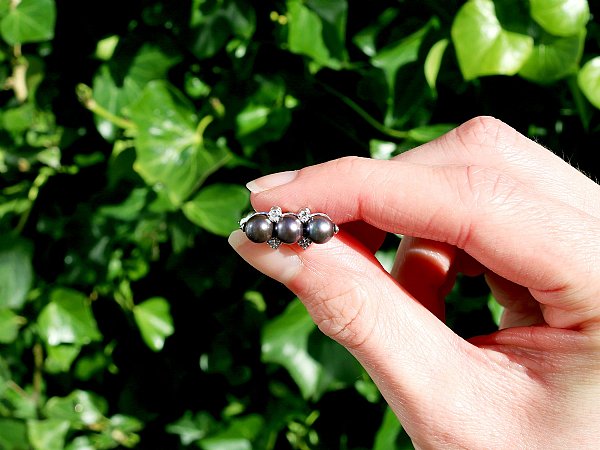
Diamond cufflinks can also become even more expressive when paired with other gemstones or materials. These vintage pearl and diamond cufflinks in 18ct white gold offer a softer, more nuanced take on the form. The lustre of the pearls sits beautifully against the sparkle of the diamonds, creating a finish that feels graceful and formal rather than flashy. This pairing is especially appealing for occasions where elegance is paramount and where subtle contrasts in texture add depth to an outfit.
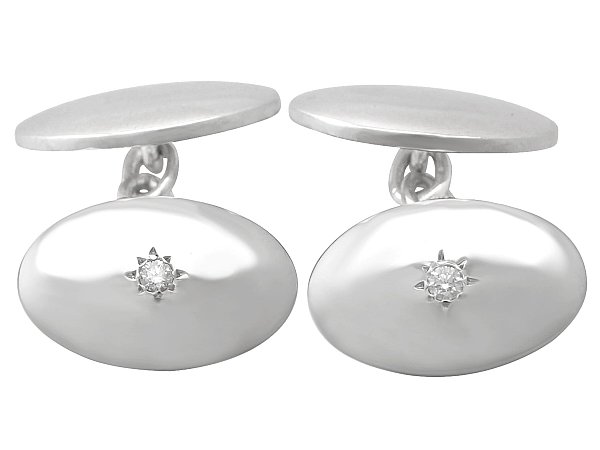
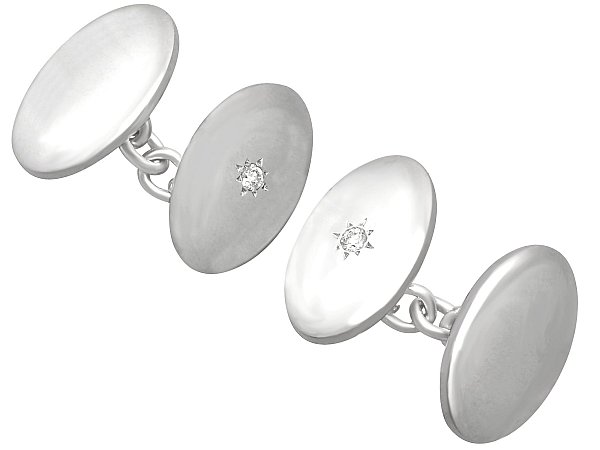
Minimalist diamond cufflinks, by comparison, are particularly suited to settings where refinement should feel effortless rather than overt. Their clean lines and restrained sparkle allow them to complement business attire and professional dress without overpowering the overall look. Because of their subtle design, these cufflinks can also be worn as part of everyday luxury, offering a discreet yet sophisticated detail that elevates tailoring with quiet confidence. This pair of contemporary white gold cufflinks set with 0.10 carats of diamonds are an excellent example of this approach, proving that diamond jewellery does not need to be elaborate to make an impression.
Coordinated Dress Sets and the Art of Formal Dressing
Some antique cufflinks were originally produced as part of coordinated dress sets, which typically included matching shirt studs designed to create a perfectly balanced formal ensemble. These sets were intended for evening dress shirts and ensured that every fastening reflected the same design and materials.
A particularly striking is the antique cufflink and stud set featuring diamonds and crystal, crafted in 14ct yellow gold and platinum. There is something especially appealing about these complete sets, as they speak to a period when formal dressing was approached with precision and elegance at every level.
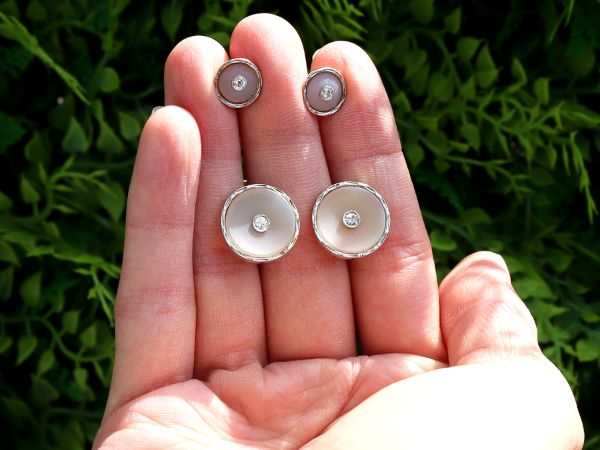
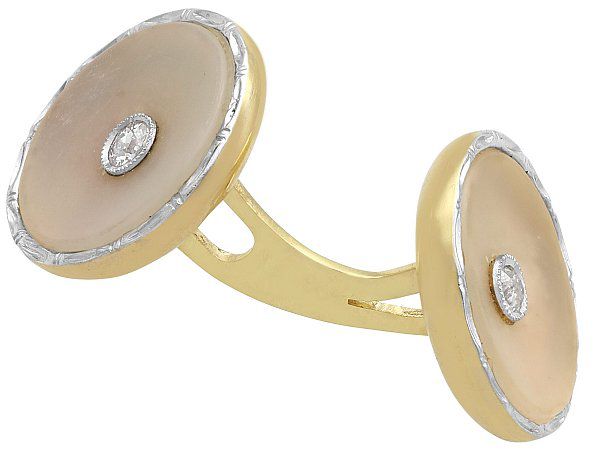
Today, coordinated sets remain highly desirable not only for their practicality, but for the sense of completeness they offer. For collectors, they represent survival and rarity. For wearers, they create a look that feels intentional, polished and deeply rooted in traditional dress.
How to Wear Diamond Cufflinks
Diamond cufflinks are worn with shirts that feature French cuffs, also known as double cuffs. Instead of fastening with buttons, the cuff is folded back on itself and secured with a cufflink threaded through the aligned buttonholes. This allows the cufflink to sit visibly at the wrist, where it becomes part of the overall silhouette of the outfit.
The beauty of diamond cufflinks is that they can be styled with remarkable ease. White gold or platinum examples tend to complement cooler colour palettes and sharper tailoring, while yellow or rose gold pieces can introduce warmth and richness to softer tones and more traditional fabrics. Because they sit in such a precise position on the body, cufflinks often have more impact than their size would suggest. They are most effective when the rest of the jewellery is kept relatively restrained, allowing the sparkle at the cuff to speak for itself.
This is what makes them such a strong choice for weddings, black tie events, formal dinners and occasions where detail matters. They bring a sense of completion to an outfit, adding polish without excess.
Choosing the Right Diamond Cufflinks
Selecting the right pair of diamond cufflinks begins with understanding the look you want to achieve. Metal plays a significant role in this. Platinum and white gold generally feel cool, sleek and contemporary, while yellow gold offers a richer, more traditional appearance. Rose gold introduces softness and individuality, particularly in antique pieces where colour contrast is part of the design.
Diamond size is another consideration, although cufflinks do not need large stones to be effective. Because they are worn at the wrist, even modest diamonds can create a noticeable flash of light through movement. In many cases, proportion matters more than size. A beautifully balanced pair of cufflinks with smaller diamonds can often feel more sophisticated than an oversized design.
For collectors, the era of the cufflinks can be just as important as their materials. Victorian, Edwardian and Art Deco examples all carry distinctive stylistic qualities, while mid-century pieces often feel clean and surprisingly modern. Choosing a pair from a specific period allows the wearer to enjoy not only the beauty of the cufflinks, but also the design history they represent.
Why Collectors Continue to Love Diamond Cufflinks
Diamond cufflinks occupy a unique place within fine jewellery because they are both practical and luxurious. They serve a purpose, yet they also offer a quiet kind of glamour that feels deeply associated with good taste. Their appeal lies in their scale as much as their sparkle. They are small enough to feel discreet, yet significant enough to transform the mood of an outfit.
For collectors and jewellery enthusiasts, they also provide a more unusual way to engage with diamonds. Rings and necklaces may always dominate the conversation, but cufflinks reward closer attention. They reflect craftsmanship, history and personality in a way that feels deeply personal. Antique and vintage examples are especially compelling because each pair carries its own sense of character, shaped by the tastes and design ideals of another era.
Perhaps that is why diamond cufflinks remain so enduring. They do not simply decorate the wrist; they reveal something about the wearer. They suggest an appreciation for detail, a respect for craftsmanship and a preference for elegance that does not need to announce itself too loudly.
Discover Antique and Vintage Diamond Cufflinks
Diamond cufflinks are more than accessories. They are part of a wider tradition of fine antique and vintage jewellery, carefully selected for their quality, authenticity and enduring style. Whether you are drawn to the clean brilliance of white gold, the period charm of Art Deco design or the refined softness of pearl and diamond combinations, there is a sense of individuality in these pieces that makes them especially rewarding to own.
For those shopping for a wedding, a milestone gift or a meaningful addition to a personal collection, diamond cufflinks offer a compelling alternative to more conventional jewellery. Elegant, practical and full of character, they remain one of the most underrated accessories in fine jewellery and one of the most rewarding to wear.