Art Deco ruby rings are widely admired today, which naturally means the market includes many later interpretations and reproductions. Some are beautifully crafted, but for those seeking a genuine early 20th-century piece, authenticity lies in the details. Identifying a true Art Deco ruby ring is rarely about one single feature. It is about how materials, stone cuts, craftsmanship and overall design come together in a way that feels cohesive and period-correct.
1) Examine the Metal
Metal choice is one of the strongest indicators of age. During the 1920s, platinum dominated fine jewellery design. Its strength allowed jewellers to create intricate, delicate-looking settings that were structurally secure. Platinum also enhanced the visual contrast between vivid rubies and bright white diamonds, a defining aesthetic of the Art Deco era.
The Art Deco Ruby and Diamond Dress Ring reflects this cool-toned, high-contrast style. Early white gold, which became increasingly popular toward the late 1920s, offered a similar crisp appearance to platinum and was often used in geometric diamond-set designs.
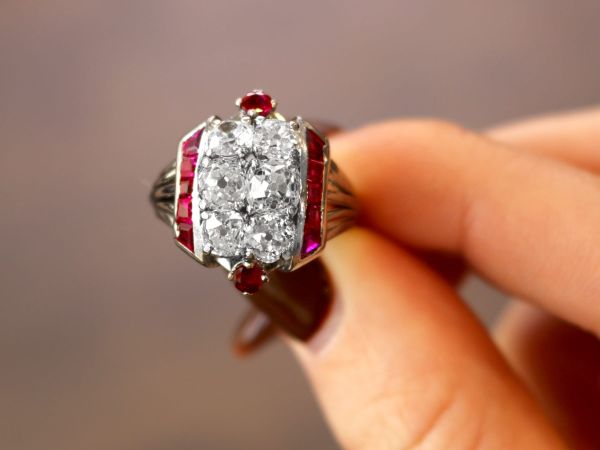
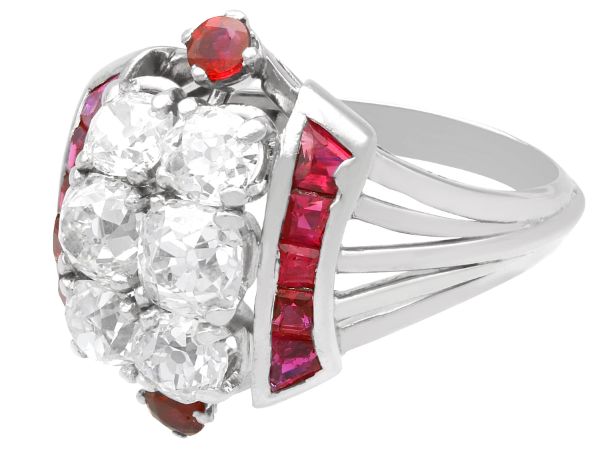
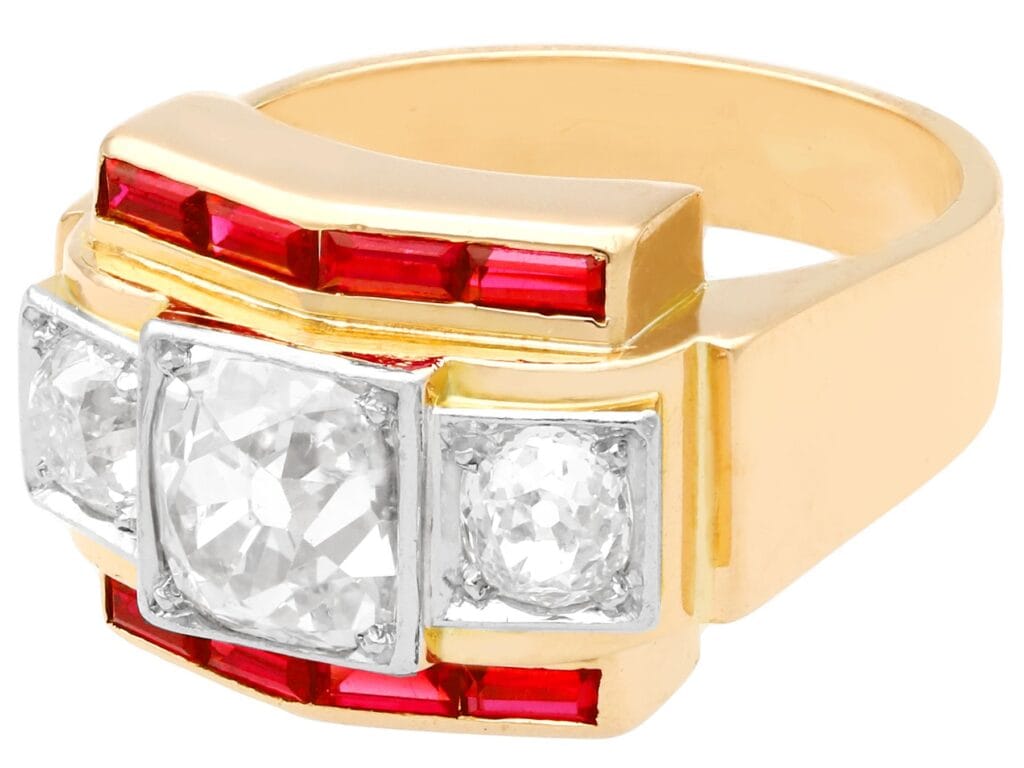
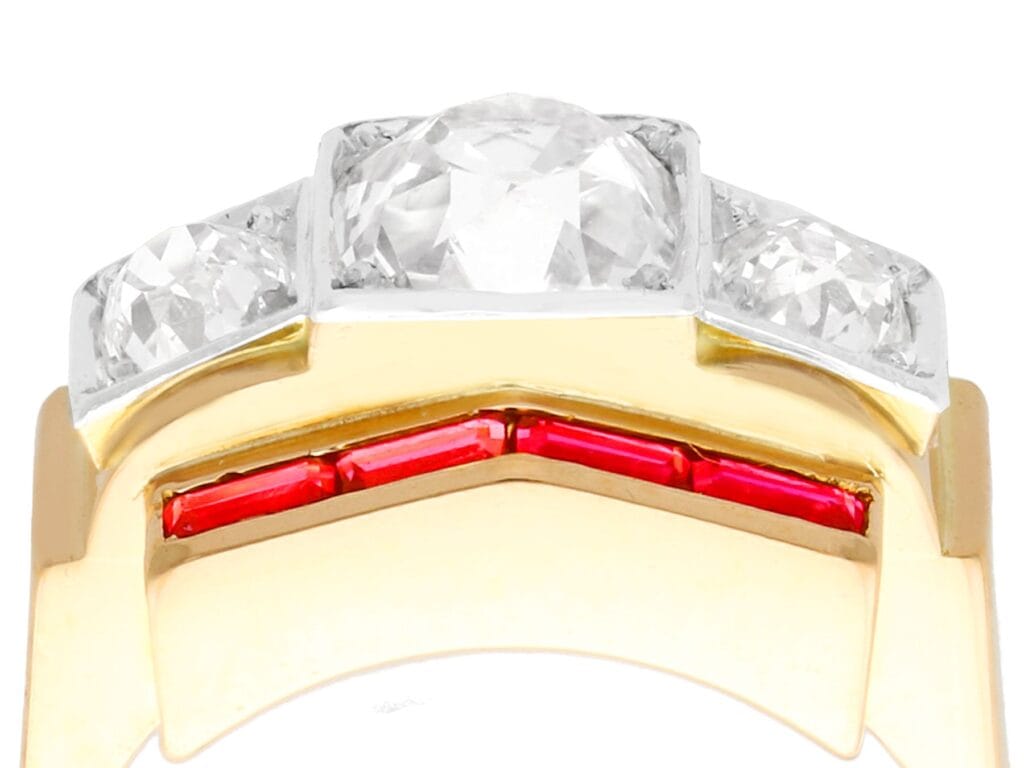
Earlier transitional pieces may combine yellow gold with platinum. Yellow gold was frequently used for the shank, while platinum secured the diamonds, blending warmth with structure. This combination is often a reassuring sign of genuine period manufacture rather than a modern reproduction.
2) Analyse the Gemstone Cuts
Gemstone cutting styles provide valuable clues. Authentic Art Deco ruby rings typically feature old European cut, single-cut or transitional cut diamonds. These stones display a softer, more romantic brilliance than modern round brilliant cuts, which are engineered for maximum sparkle.
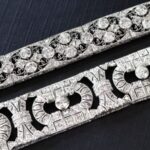
To achiece the architectural ‘hall or mirrors’ effect in Art Deco jewellery many jewellers use emerald, asscher and baguette cut diamonds and gemstone also. These diamond cuts provide linear, clean structured lines to give strong Art Deco symmetry.
3) Assess the Ruby Setting
The design of an Art Deco ruby ring can offer significant insights into its authenticity. In the 1920s and 1930s, jewelers preferred elegant geometric settings that mirrored the era’s love for modernity, symmetry, and architectural aesthetics. Platinum was often the metal of choice for many luxurious pieces because of its durability and capacity to showcase intricate details, although white gold also gained popularity.
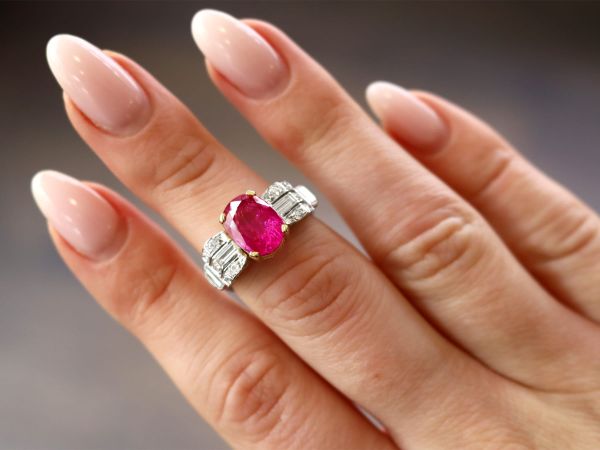
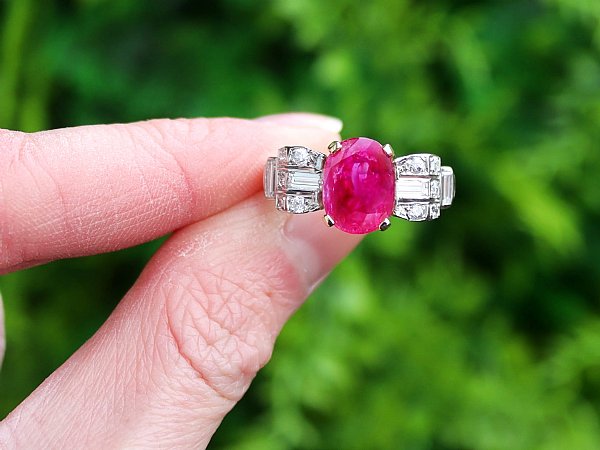
Common features of Art Deco settings included stepped bezels, expertly crafted claw settings, openwork galleries, and fine millegrain edging, all aimed at highlighting the clean lines and exact proportions characteristic of the period.
Pavé settings were popular, particularly with diamonds. Instead of fully covering the ring with small stones, Art Deco jewelers frequently used pavé-set diamonds to accentuate a central ruby, adorn the shoulders, or craft eye-catching geometric patterns. Rubies were often paired with diamonds, onyx, sapphires, or emeralds to create vivid contrasts in color and texture.
The finest examples merge exceptional craftsmanship with a robust geometric design, resulting in a well-balanced and elegant piece. When evaluating a ruby ring, look for these signature setting styles, along with signs of hand-finishing and period craftsmanship, as they can assist in identifying a true Art Deco item from a later reproduction.
4) Study the Craftsmanship
The quality of craftsmanship can reveal a great deal about whether a ruby ring is a genuine Art Deco piece. Jewellery produced during the 1920s and 1930s was crafted to exceptionally high standards, with many elements completed or finished by hand. As a result, authentic Art Deco rings often display fine attention to detail, precise stone setting, and intricate metalwork that can be difficult to replicate in modern mass-produced jewellery.
Pay attention to details like sharp geometric designs, intricate millegrain borders, delicately pierced openwork galleries, and expertly crafted settings that securely and symmetrically hold the stones. Platinum settings from this era are especially remarkable, as this metal enabled jewelers to craft incredibly detailed designs while ensuring strength and longevity. Additionally, the underside of the ring can reveal important insights; authentic Art Deco items frequently showcase graceful pierced or engraved elements that reflect the artisan’s dedication to quality, even in parts that aren’t readily seen when worn.
5) Consider Provenance and Professional Assessment
Hallmarks can assist with dating, but they are not always definitive. Some genuine Art Deco rings are unmarked, particularly if they were created for specific retailers or export markets.
For rings featuring significant stones, such as Burmese rubies, professional expertise is particularly important. Reputable dealers can confirm materials, period origin and condition, helping to distinguish between a true 1920s piece and a later revival design.
When all elements align (appropriate metals, period diamond cuts, geometric ruby settings and refined craftsmanship) the result is more than just a beautiful ring. It is a genuine reflection of early 20th-century design, offering both historical significance and enduring elegance.