For those in search of a unique, romantic piece that carries a sense of history, Art Deco ruby engagement rings offer a captivating alternative to the classic diamond solitaire. Crafted during the renowned Art Deco era (1908–1935) or inspired by its bold geometric designs and architectural symmetry, these rings beautifully merge vibrant hues with exquisite platinum craftsmanship.
While diamonds have long dominated engagement traditions, rubies were highly fashionable during the 1920s and 1930s. Their vivid crimson hue created dramatic contrast against platinum and white gold, particularly when paired with old-cut or baguette diamonds. The result was jewellery that felt modern, confident, and unmistakably glamorous.
Why Choose a Ruby Engagement Ring?
1. Symbolism
For centuries, rubies have been celebrated as one of the most powerful and treasured gemstones in existence. In ancient Burma, now known as Myanmar, warriors thought that rubies granted them protection and made them unbeatable in combat. In medieval Europe, this striking stone was tied to ideas of prosperity, vitality, and wisdom. Throughout many cultures, the ruby’s vibrant red color has symbolized the heart, passion, and enduring love — making it a natural symbol of loyalty and commitment.
In the early 1900s, the Art Deco movement was at its peak, and rubies became a symbol of style for those who loved bold colours and modern aesthetics. Their brilliant red tones contrasted dramatically with platinum and diamonds, embodying themes of strength and vitality.
As the birthstone for July and a traditional gift for significant anniversaries, rubies are layered with historical and emotional significance. By selecting an Art Deco ruby engagement ring, you’re not just choosing a piece of jewellery; you’re connecting with centuries of meaning and the architectural beauty of the 1908–1935 period, making it a powerful and personal
2. Distinctive Colour
An Art Deco ruby and diamond ring immediately stands apart from a traditional diamond engagement ring. The bold colour reflects individuality and confidence; qualities celebrated during the Deco era.
3. Geometric Elegance
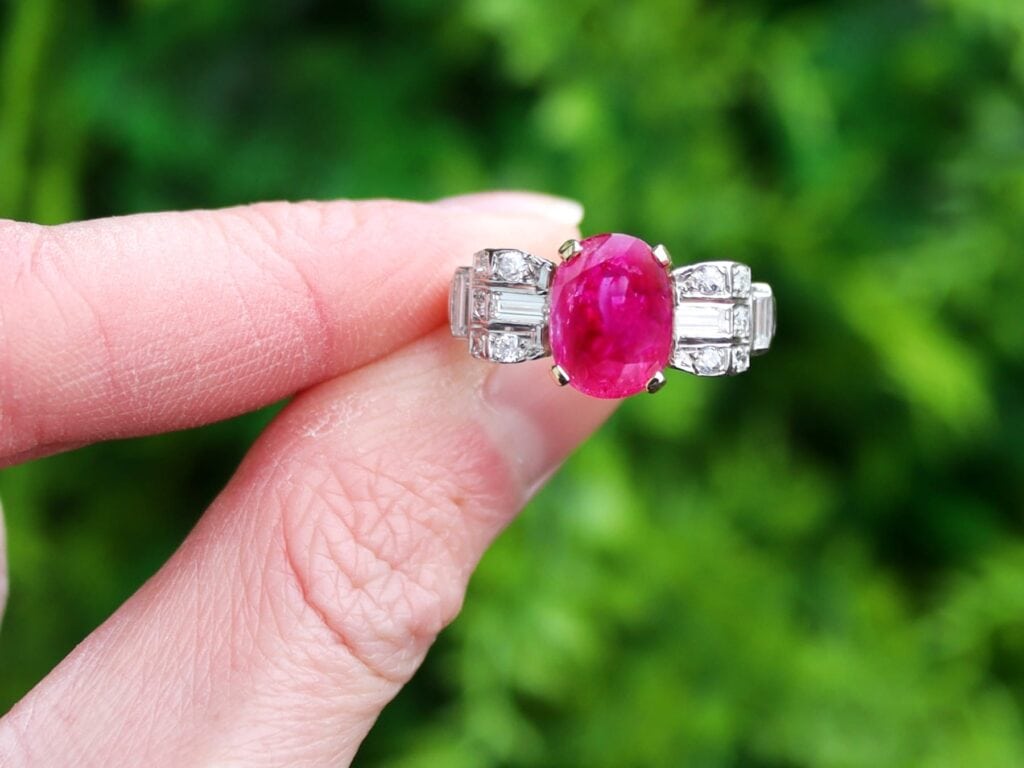
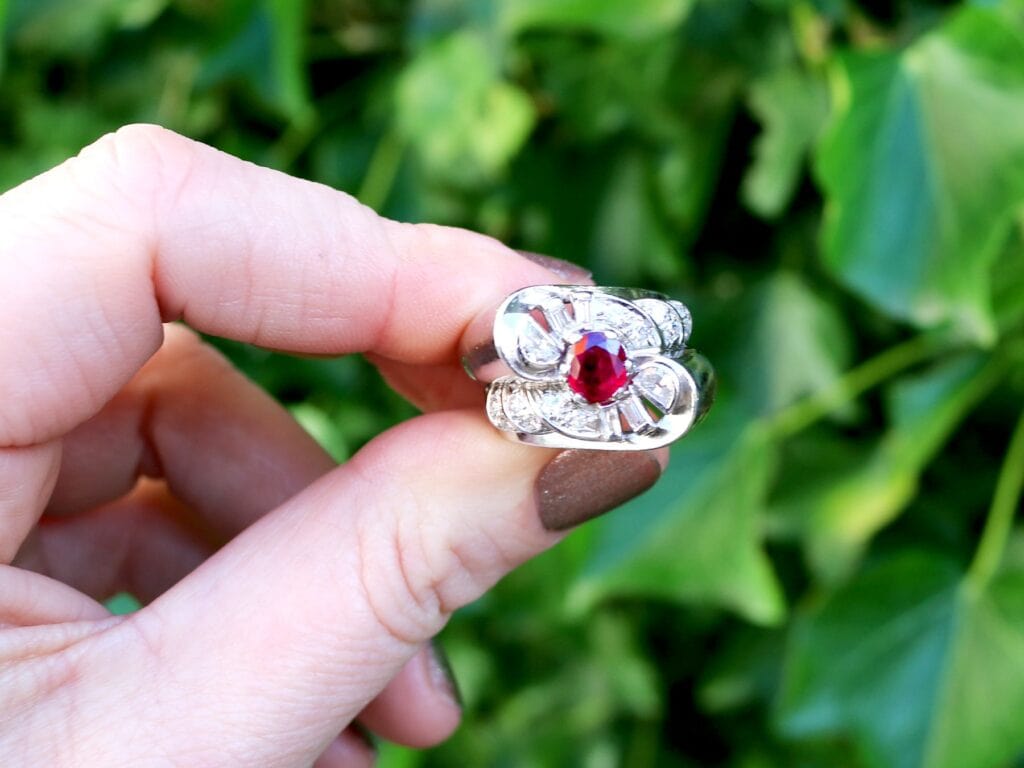
One of the defining characteristics of an Art Deco ruby engagement ring is its striking geometric elegance. Unlike earlier romantic styles, Art Deco design embraced bold symmetry and architectural precision.
Ruby centre stones are often framed by old European-cut or transitional-cut diamonds, creating dramatic contrast and visual balance.
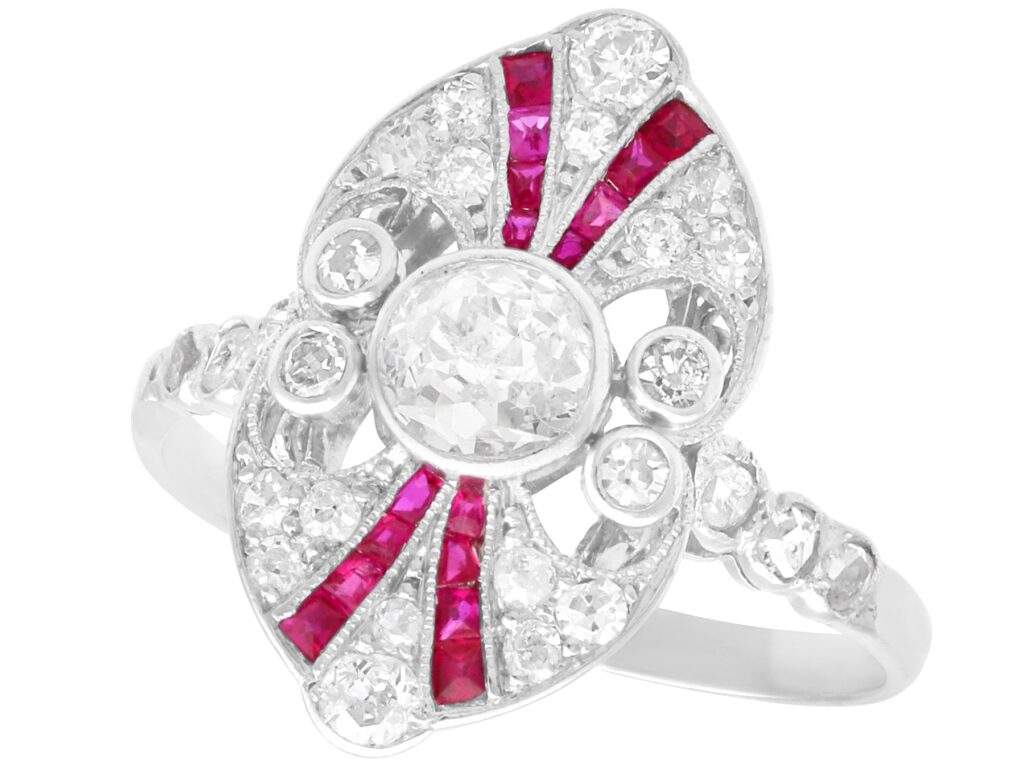
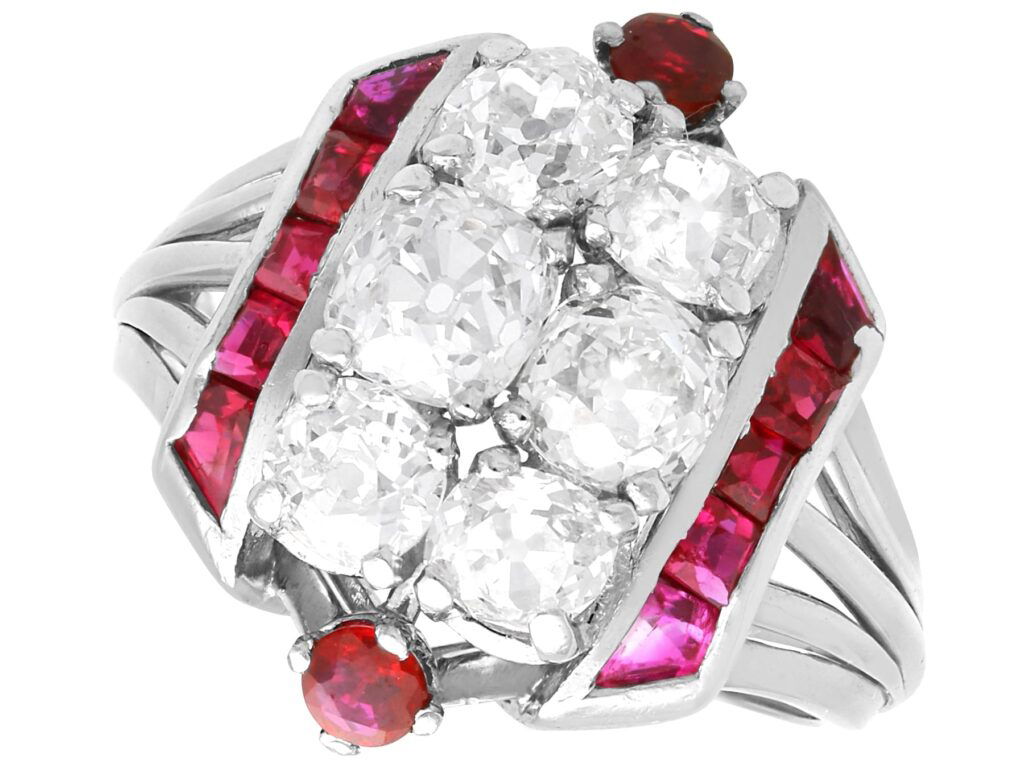
Calibré-cut ruby borders meticulously shaped to fit seamlessly into stepped settings, enhance the structured aesthetic, while elongated navette silhouettes and tiered platinum mountings emphasise clean lines and proportion.
Symmetrical cluster designs, sharp angles, and refined millegrain detailing further define these pieces, giving Art Deco ruby rings their unmistakable architectural presence and timeless sophistication.
4. A Meaningful Birthstone Choice
A ruby engagement ring also holds special significance as the birthstone for July. Choosing a ruby as a birthstone engagement ring adds a deeply personal element, making it especially meaningful for those born in midsummer. Beyond its vibrant beauty, the ruby has long been associated with vitality, protection, and enduring love — qualities that make it a powerful symbol for commitment.
An Art Deco ruby engagement ring selected for its birthstone connection combines personal sentiment with historic craftsmanship. Whether marking an engagement, anniversary, or milestone birthday, a ruby birthstone ring offers individuality while retaining the timeless elegance of the 1908–1935 Art Deco era.
Popular Styles of Art Deco Ruby Engagement Rings
The 1920s marked the emergence of a design style that would leave a lasting impact on history, known as Art Deco. This striking and opulent style influenced various artistic fields, including architecture, painting, and certainly jewellery.
Colour played a crucial role in the design of Art Deco rings, leading to the incorporation of popular gemstones like rubies in engagement ring designs, as illustrated by the popular styles below…
1. Ruby and Diamond Cluster Rings
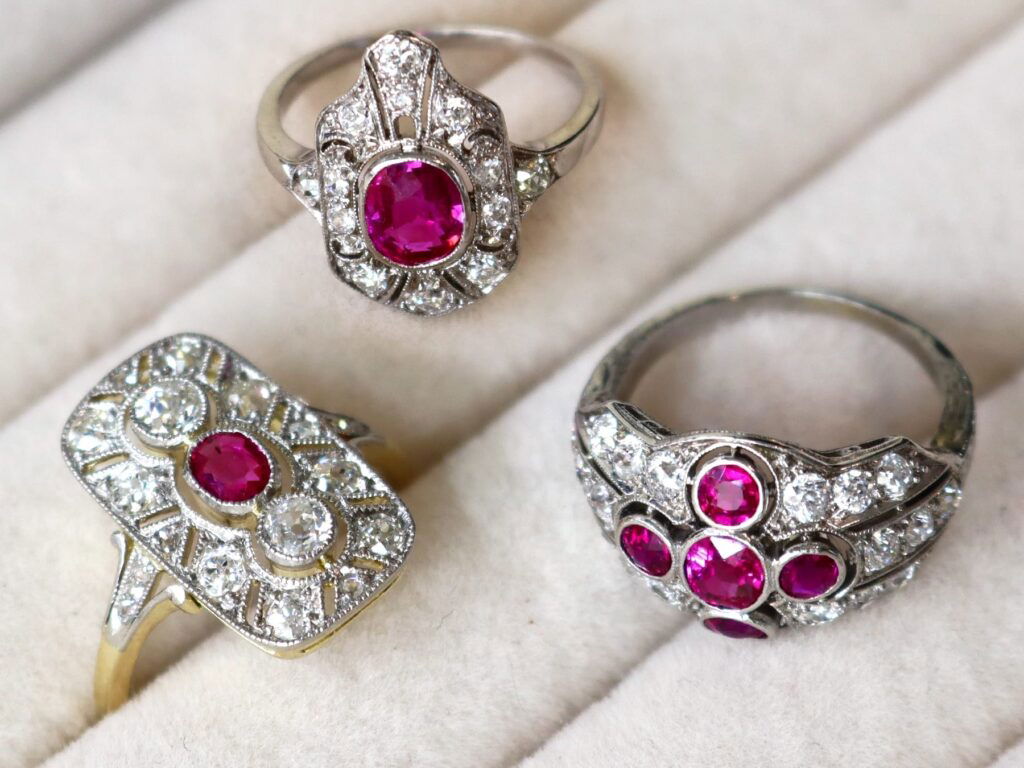
One of the most iconic designs from the Art Deco era is the ruby and diamond cluster ring, which showcases a striking central ruby surrounded by a halo diamonds.
Unlike the more delicate floral clusters typical of the Victorian period, Art Deco cluster rings prioritise symmetry, proportion, and sharp geometry.
The ruby is frequently set in a meticulously crafted platinum setting, occasionally accented with fine millegrain detailing to highlight the contrast between the richly coloured centre stone and the surrounding diamonds.
The halo can take on a circular, cushion, or gently angular shape, reflecting the Deco era’s fascination with architectural harmony.
The halo can take on a circular, cushion, or gently angular shape, reflecting the Deco era’s fascination with architectural harmony.
The contrast between the deep red ruby and the bright white diamonds embodies the period’s appreciation for bold color contrasts while preserving an air of refined elegance.
2. Platinum Navette Rings
The navette-shaped ring, characterised by its elongated, marquise-like silhouette, became a real sensation in the 1920s and 1930s.
Art Deco navette rings emphasize verticality and a streamlined look, reflecting the influence of skyscrapers and modern architecture. In ruby designs, the central stone is often flanked by tapered baguette diamonds or set within a pointed diamond border, enhancing the dramatic length of the piece.
Mostly crafted in platinum, the defining metal of the Deco era, these rings feature beautiful openwork galleries and stepped shoulders that reinforce their structural elegance. The result is a refined yet striking design that draws the eye along its symmetrical axis, making the navette one of the most iconic Art Deco ruby ring styles.
3. Calibré-Cut Ruby Rings
Among the most technically impressive Art Deco creations are calibré-cut ruby rings.
In these designs, small rubies are meticulously cut to precise dimensions in order to fit seamlessly into geometric frameworks, whether square, rectangular, triangular, or curved forms. This technique allowed jewellers to create uninterrupted bands of colour that accentuated angular diamond centres, stepped motifs, and bold linear patterns.
Often set in platinum alongside baguette or step-cut diamonds, calibré-cut rubies enhance the architectural clarity that defines Art Deco jewellery. The craftsmanship required for this precision setting is considerable, and well-executed examples remain highly prized by collectors for both their technical mastery and unmistakable Deco aesthetic.
4. 1920s Cocktail-Inspired Rings
The rise of cocktail culture in the late 1920s brought with it a demand for larger, more dramatic rings — and rubies were perfectly suited to this expressive style. 1920s cocktail-inspired ruby rings often feature substantial centre stones or richly coloured ruby panels contrasted with geometric diamond surrounds and bold platinum settings.
Strong colour blocking, particularly the pairing of ruby with onyx or baguette diamonds — reflects the era’s fascination with high contrast and visual impact. These designs were not intended to be understated; rather, they celebrated individuality and modern glamour.
The confident scale and sculptural quality of cocktail-style Art Deco ruby rings continue to appeal to those seeking a statement engagement ring rooted in historical sophistication.
Are Art Deco Ruby Engagement Rings Suitable for Everyday Wear?
Rubies are durable gemstones (second only to diamonds in hardness), making them suitable for regular wear. When set in platinum, the defining metal of the Art Deco period, they provide both strength and longevity.
Buying an Art Deco Ruby Engagement Ring
When purchasing an antique ruby engagement ring, look for:
- Period-correct craftsmanship (1908–1935)
- Platinum or white gold settings
- Old-cut diamonds
- Independent gemstone certification
- Metal purity verification
If you are searching for Art Deco ruby engagement rings in the UK, choosing a reputable antique jewellery specialist ensures authenticity and quality.
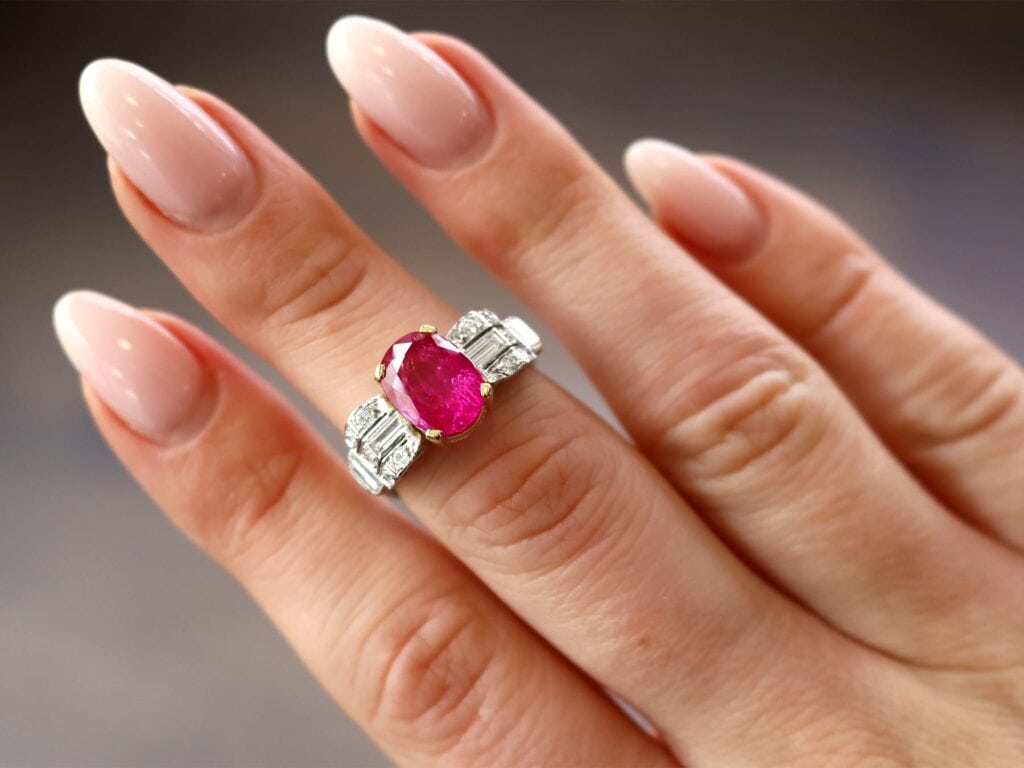
Art Deco Ruby Rings
Explore the bold glamour and architectural precision of our Art Deco ruby rings, inspired by the celebrated Art Deco period from 1908 to 1935.